The smaller projects that can't fill an entire cases study but are interesting to read about live here.
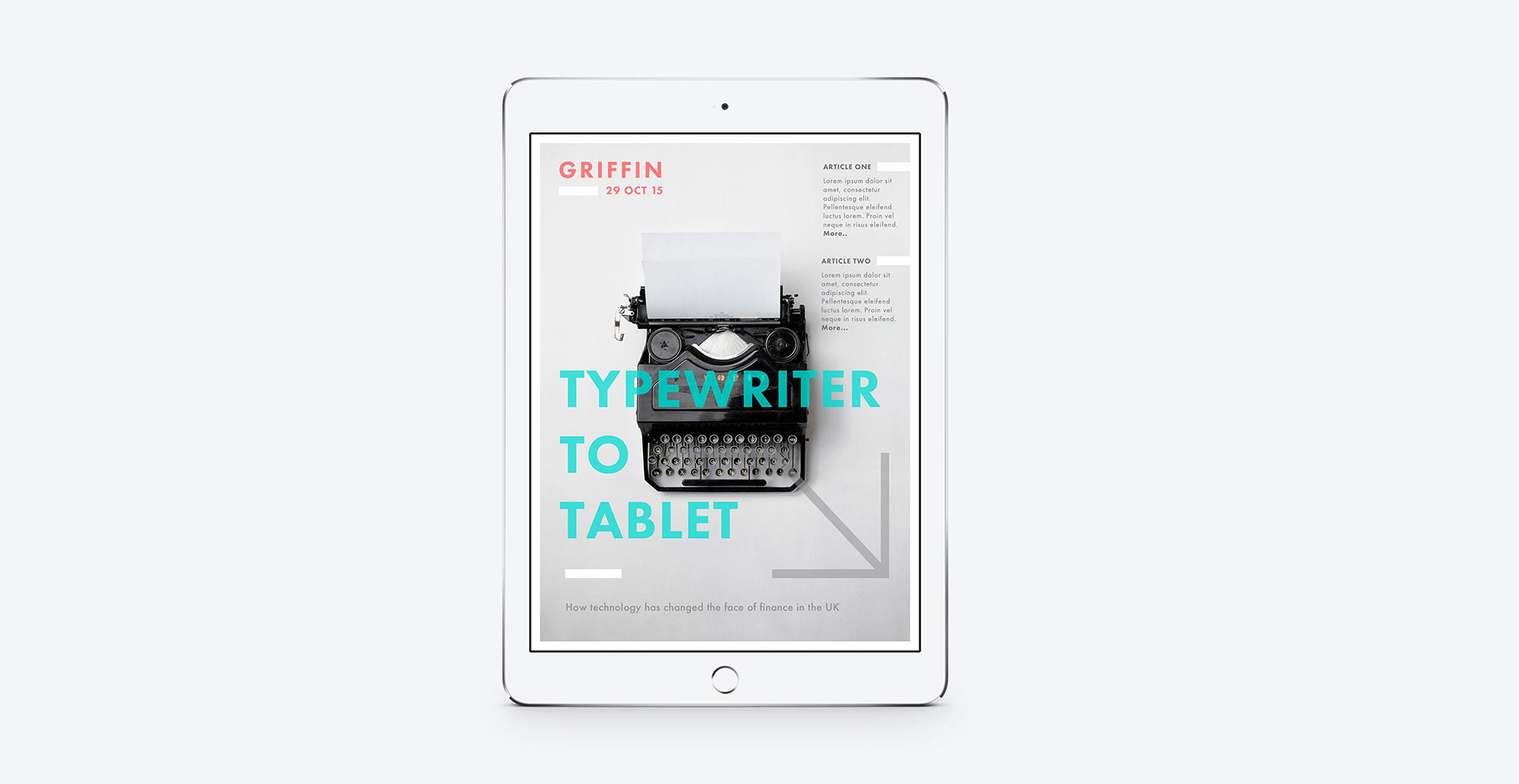
Griffin - a digital magazine for CISI Financial Services. We won this client in a peculiar way, and didn't fully understand the brief as the client wasn't really sure what they needed. It was pitched to us as a digital magazine to introduce the career opportunities in financial services to college students. It turned out to be an app build, CMS integration, and content strategy project with a 10 day turnaround.
With only two of us on the work, and the first days spent in conversation with the target market, the deadline was a tough one. We built the native iPad app using an early version of Swift, designing directly into the build whilst I built the app my colleague wrote an API to expose content in CISI's CMS (Sitecore at the time) for the app to ingest, and then went about augmenting the taxonomy in the CMS so we ca unsure only relevant content was exposed. The app and back end build to 6 days all up - from a sketch to a working magazine. The final two days were spent with the marketing and content teams working up a 6 month content strategy and calendar. The magazine went live via partner colleges to over 100k students in 2017.
Sadly, as time was tight. we didn't think to document much of the work.
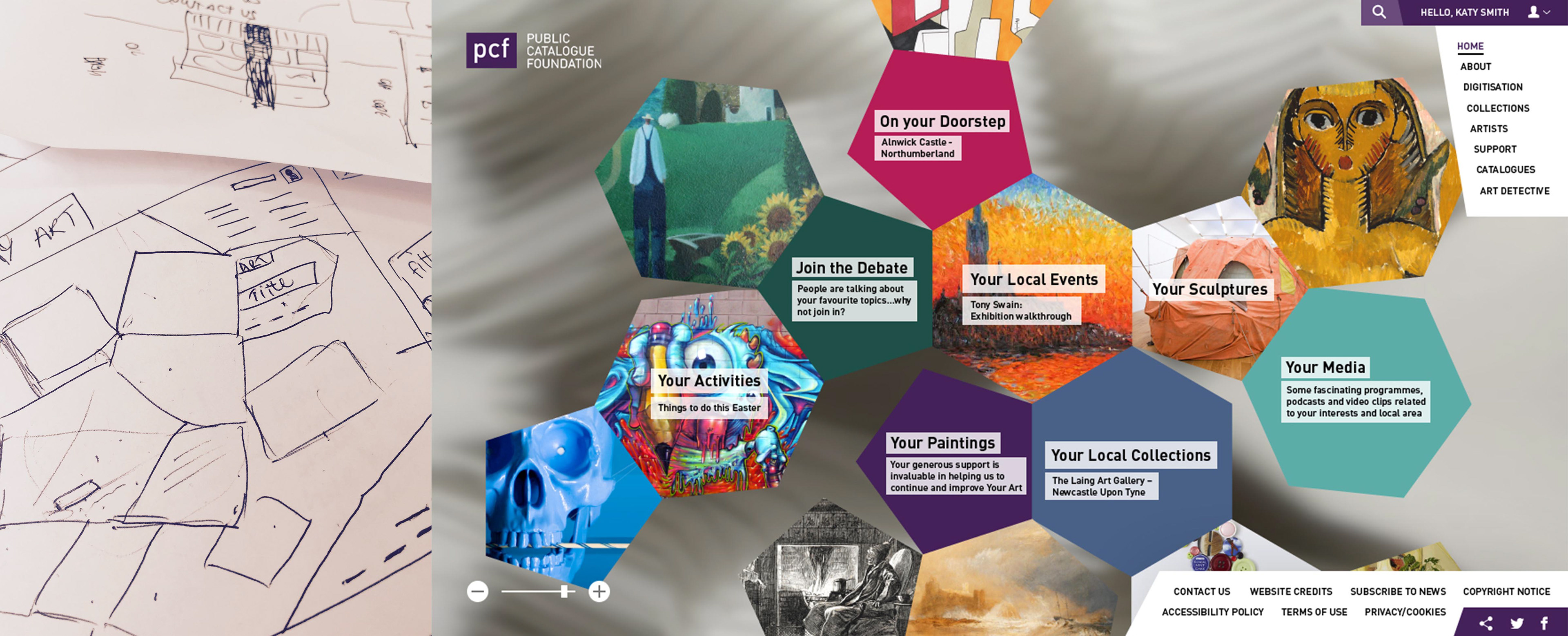
Public Catalogue Foundation - personalisation experiment.
This was a really fun if daunting thing to work on. The concept was to use complex tracking and data analysis to understand the psychology of gallery visitors to expose them to artworks they'd normally avoid, but in way that kept them engaged.
We used the following data to understand gallery visitors:
Social Media - Twitter, Instagram, Facebook, and associated data from third party partners allowed us to understand the political, religious, and emotional leanings. From this data we were able to show artwork that would reinforce an existing bias, or show artworks that could challenge these beliefs to an uncomfortable level.
Web activity - before the days of anti-tracking policy we could collate data from a variety of sources to understand the online behaviour of visitors. We worked with behavioural psychologists to rank certain sites and online activities against key metrics, which we used as a check for the social media data. I.e. if one set of data suggested a specific user type, did the second set agree?
Purchasing data - before GDPR we could (pay for access to) see everything visitors had purchased in the previous 90 days. In a similar way to online tracking, we scored purchase types and the behaviour surrounding the purchases against a matrix of known traits, and we used this data to surface or hide artworks that could trigger emotional responses in key customer groups. We would then check the impact of this with exit surveys. For example we could trigger feelings of anxiety and then reverse these feelings, but only in certain groups of people.
The gallery was mainly online, however a small physical gallery using digital canvases was also used to test the theory.
This experiment can be considered art in it's own right, and although at the time was considered interesting and possibly "a bit creepy" it did show us the potential our digital trail has to impact our lives. This experiment ran before the Trump Campaign used similar tactics to understand and manipulate voters at a mass scale. This technology is now being used in a variety of ways, and is the subject of my ongoing research into behavioural modification through digital content.