"I'm not here" is an ongoing exploration of withdrawal - the pull toward solitude, the idea of disappearing into the margins.
Born from my own struggles with depression and the weight of conventional living, this work seeks out those living on society's edges. I photograph people who've retreated – or been pushed – to out-of-the-way places, often near water, where distance from the world becomes both refuge and exile.
The photographs are intimate portraits of the people and the places where they live, alongside traces of their existence.
This project moves slowly, built on trust that takes time to earn. It may never be finished. I make these photographs for myself and for the people who let me into their lives - not for an audience, but as a document of the complicated desire to escape, and the reality of what that escape actually looks like.
The Swale
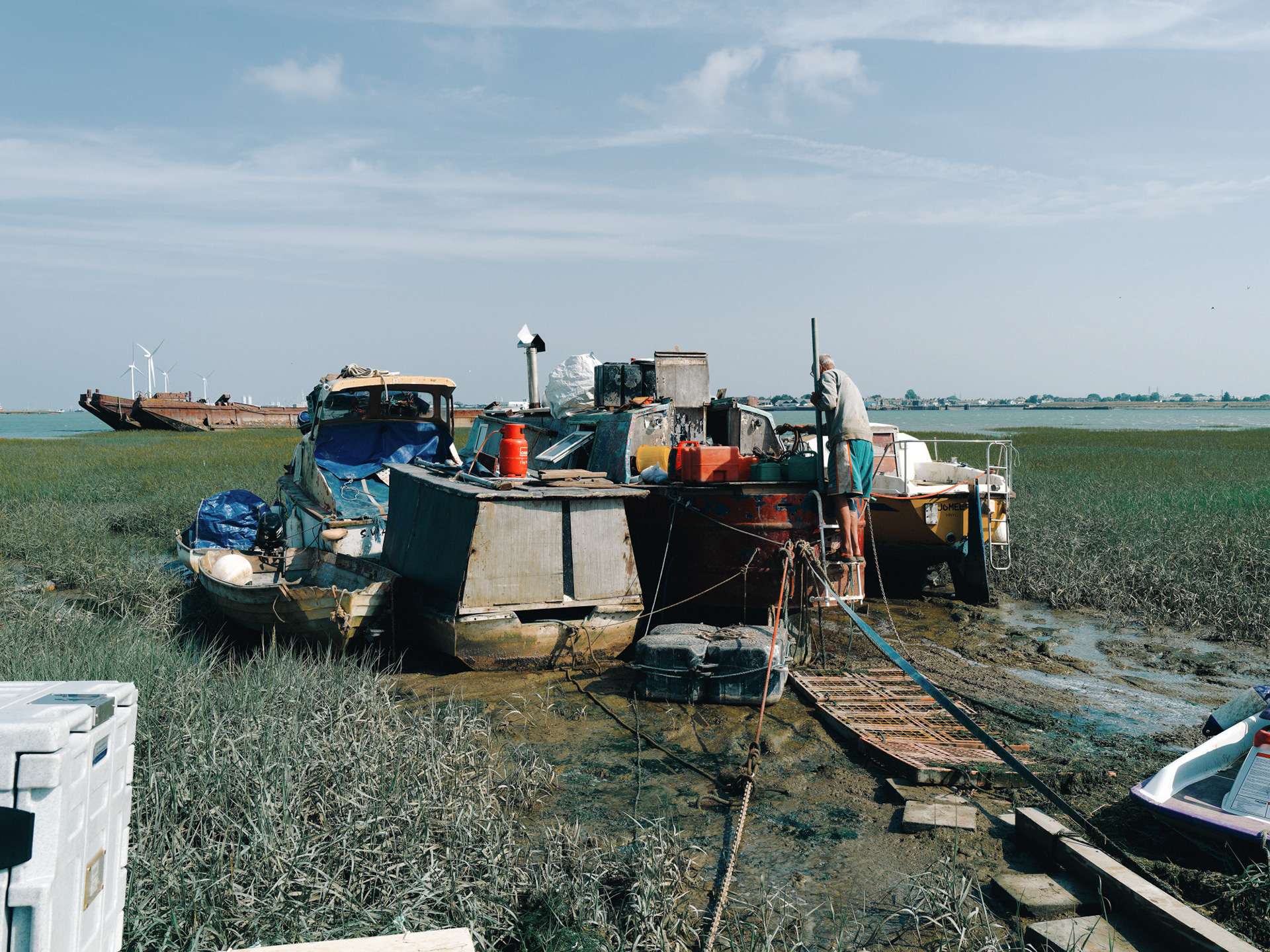
Tim’s home, a collection of vessels tied together, has grown through the years. Purchased or claimed, Tim has a plan in mind for each of them. One will become a workshop, another will be storage. They each have a future purpose.
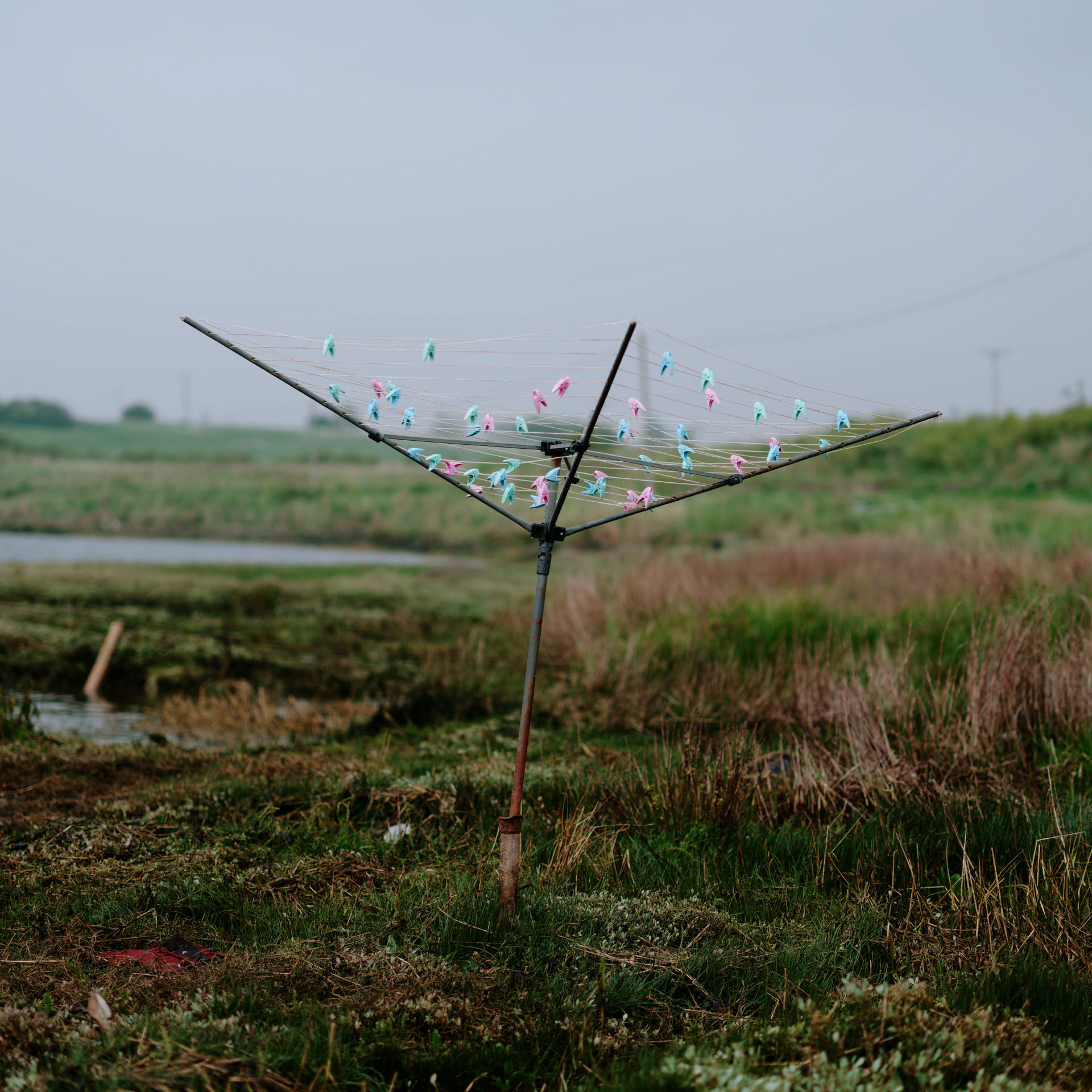
The pegs remind me of small birds, their colours bringing a contrast to the green and brown tones of everything in this place. The rust on the central pole reveals how high up the water can come.
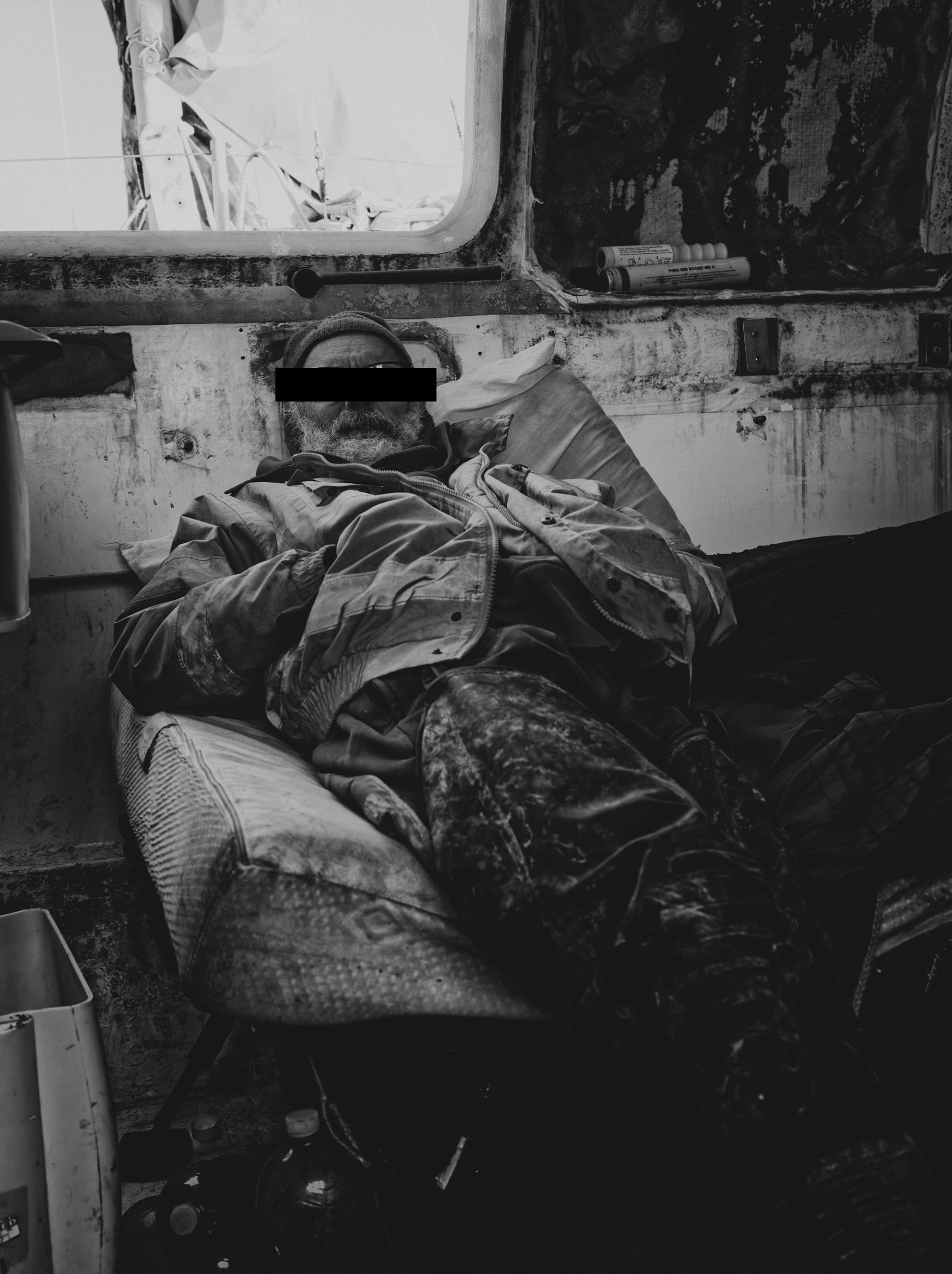
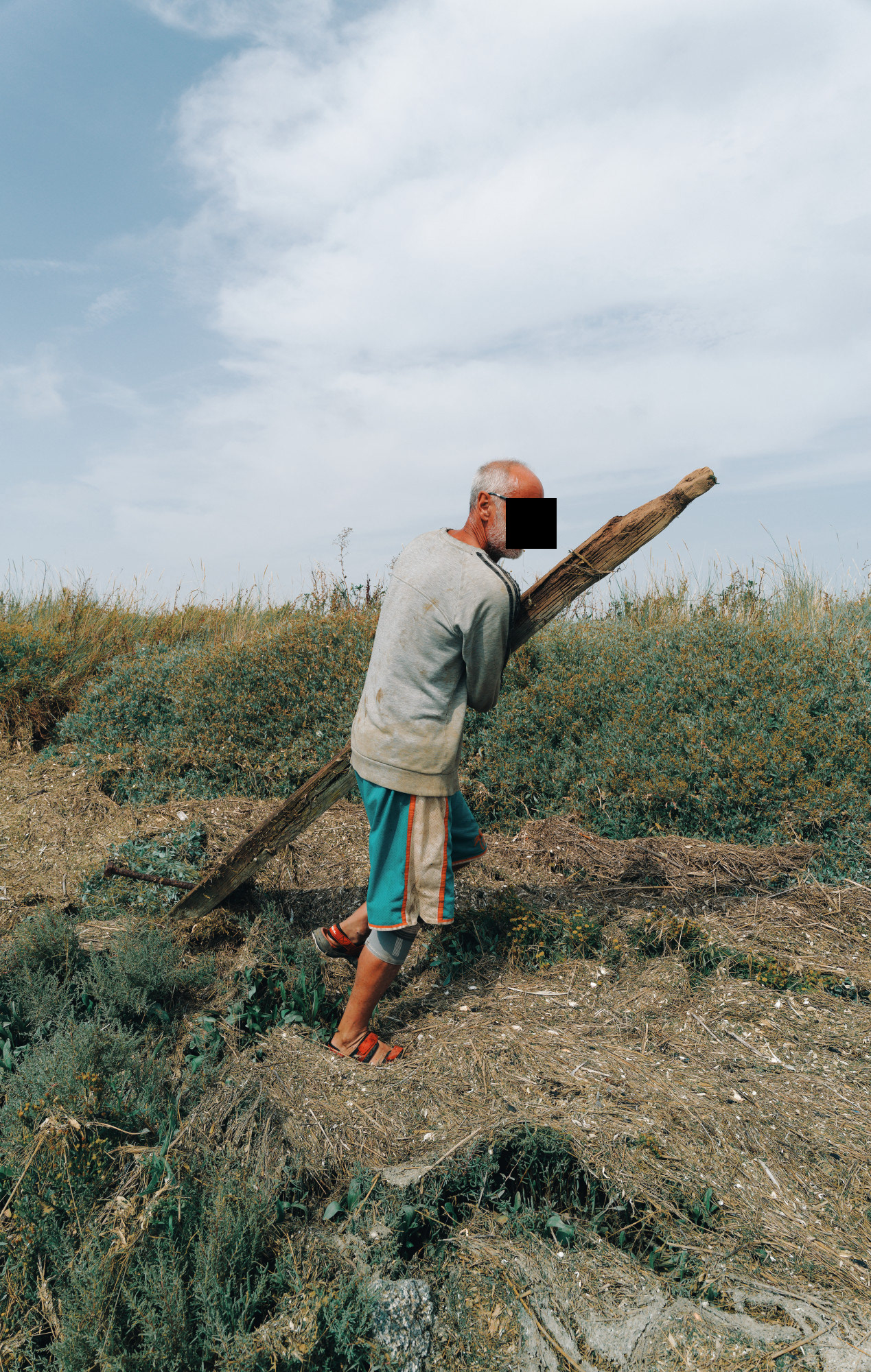
Tim in his lifeboat, and collecting driftwood for the wood burner.
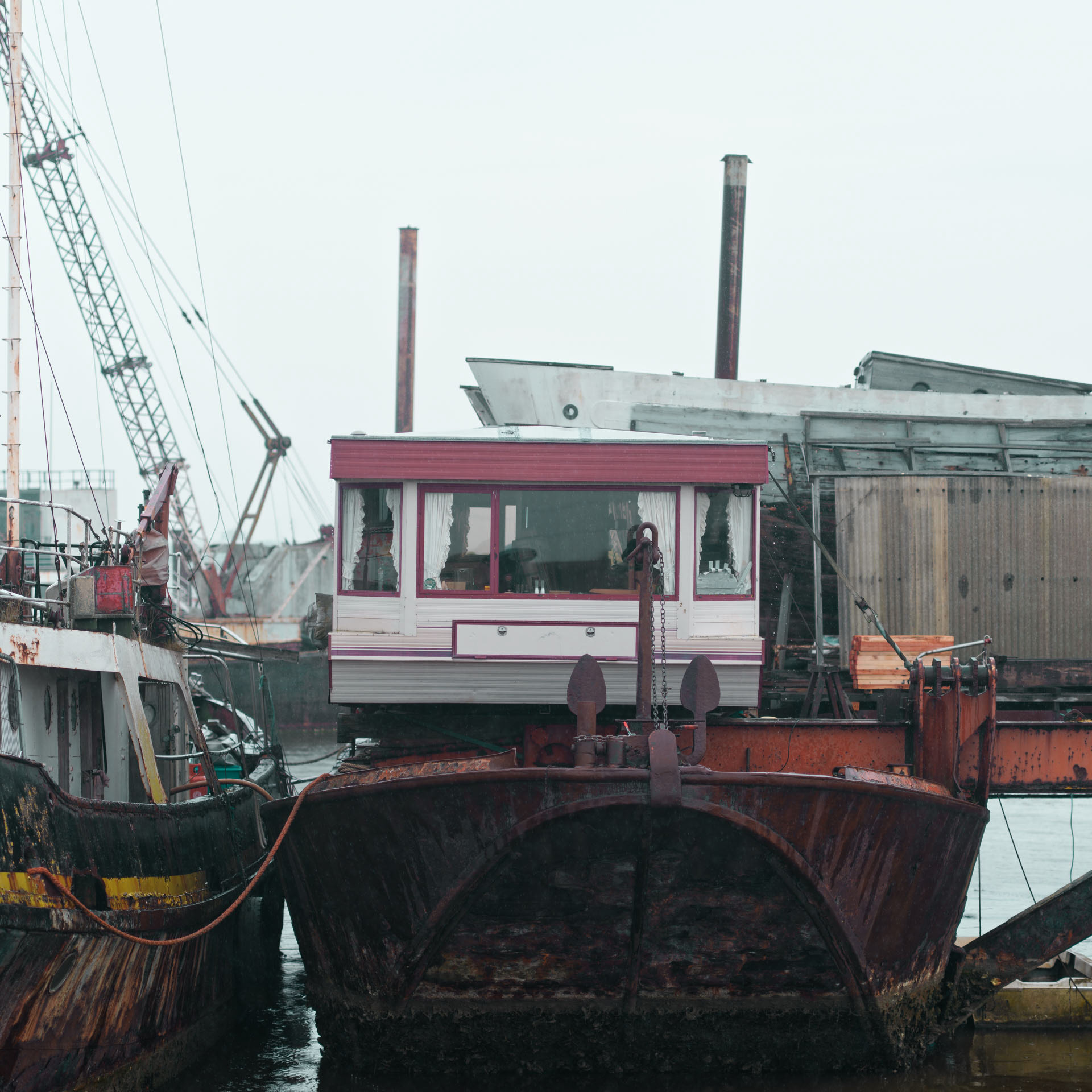
After boarding the owner quickly and quietly lifts and stows his ladder. In raising the only way onboard, he signals his desire to be left alone. We never speak.
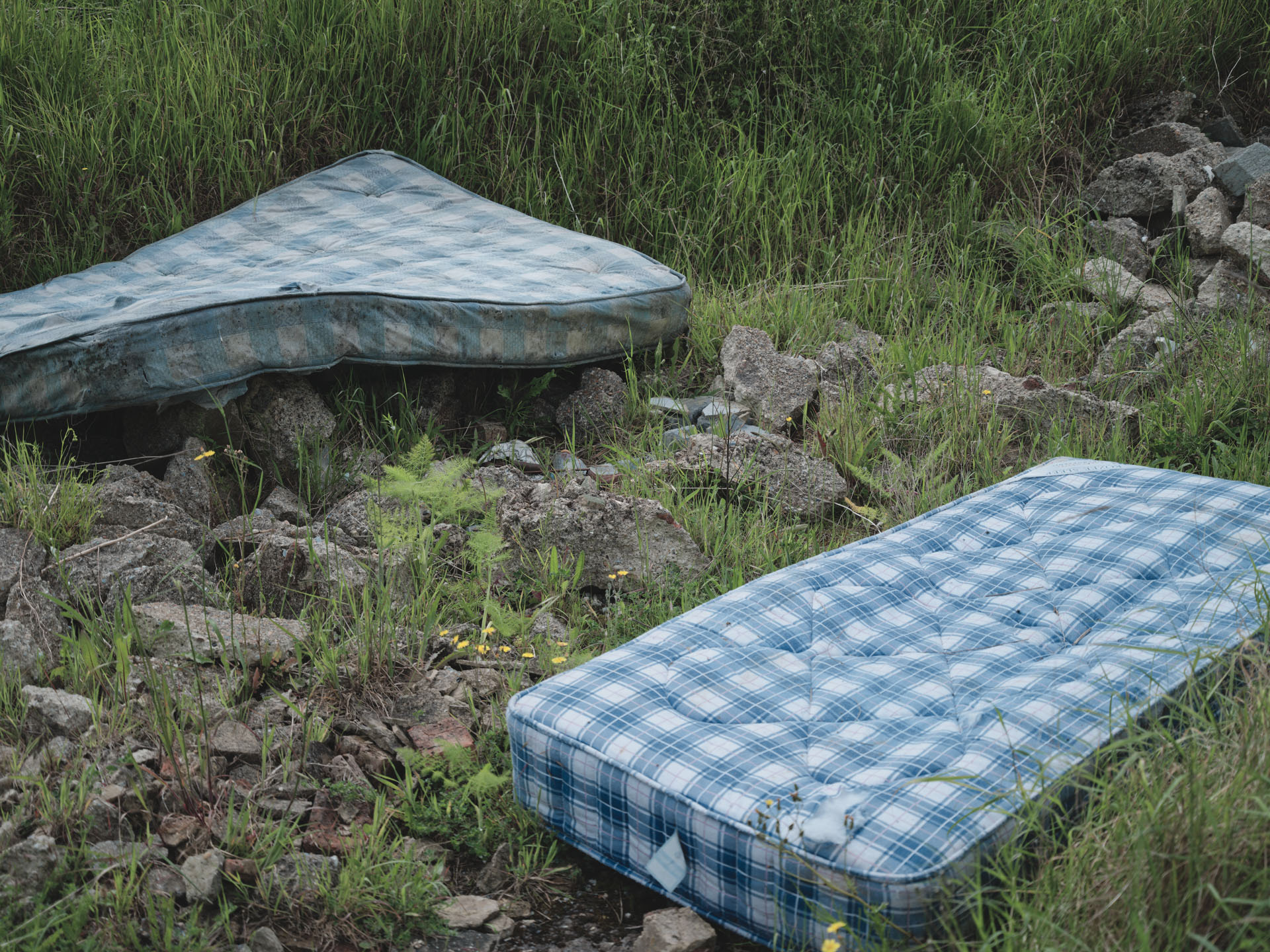
These are not dumped, the left is being replaced by the right. “They don’t last long here, it’s too damp. A couple of years maybe. You burn the old ones to stop the rats using it.”
The edge
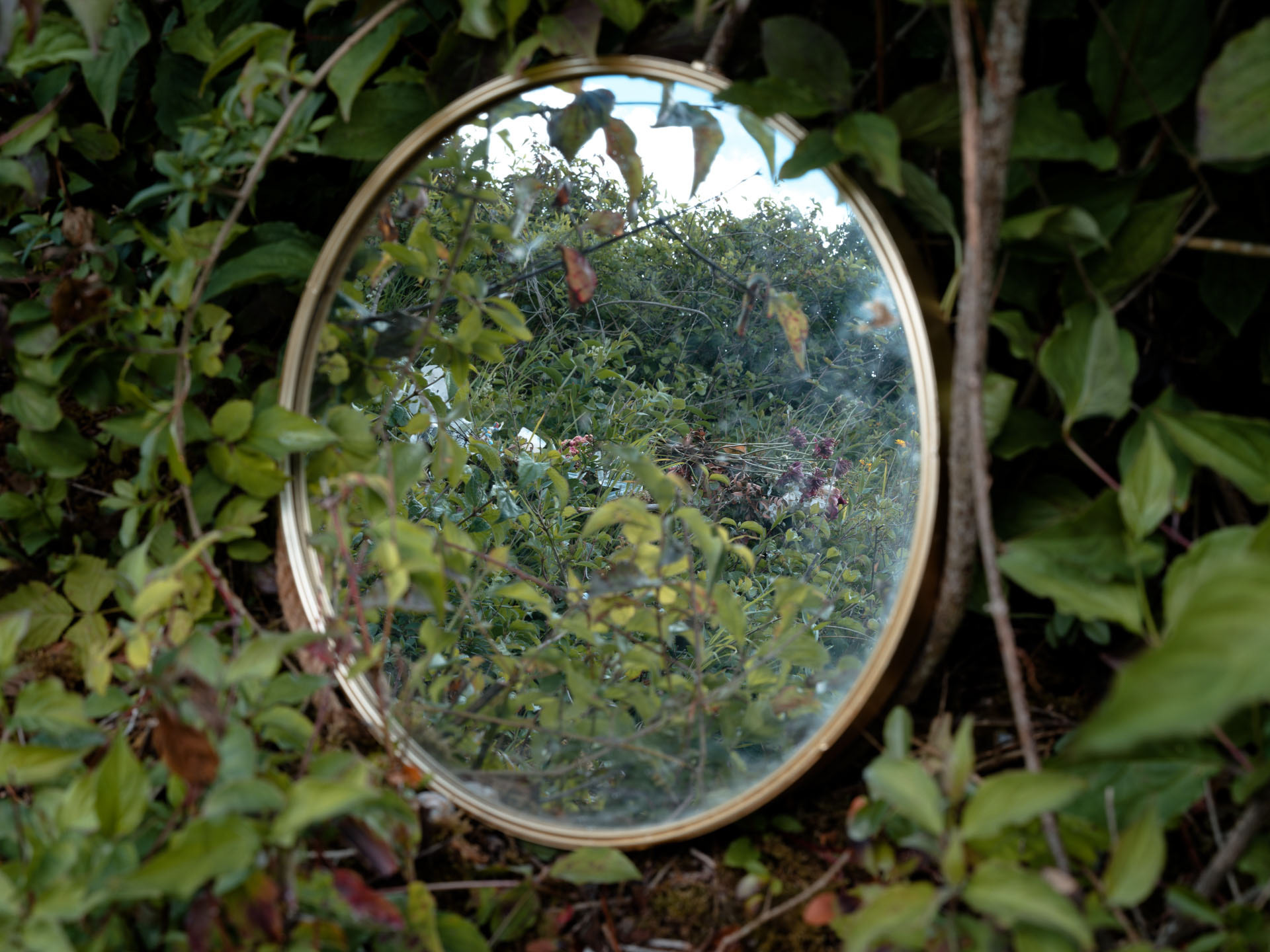
The mirror, left in the undergrowth, captures and offers the last of the day’s light to flowers and artifacts left in memory of a 24 year old woman.
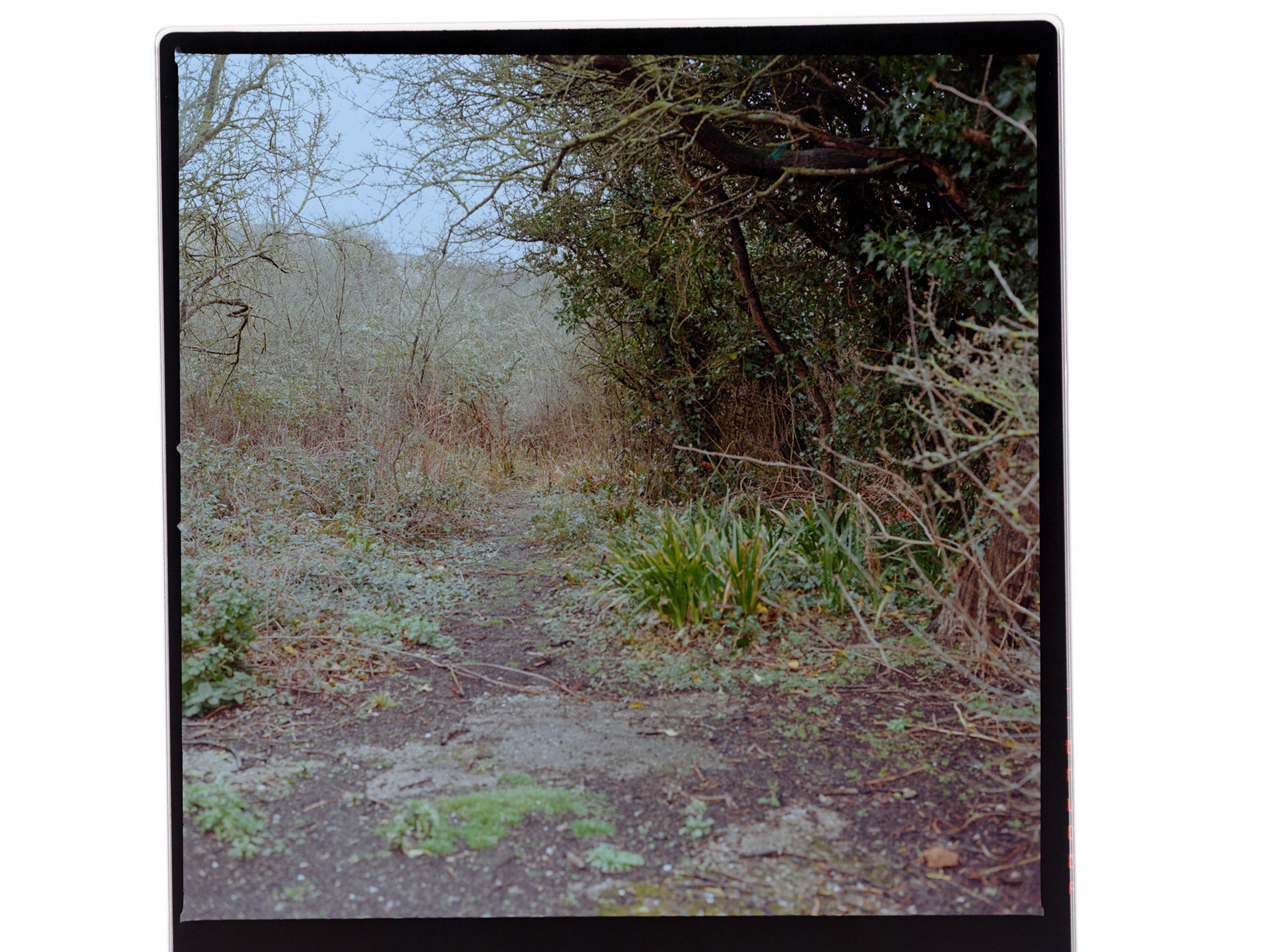
Unnoticed trails lead to hidden homes. Some of these structures are no more than a few paces from public footpaths, but they and the people who live in them remain hidden. The majority would never think to walk into the bushes.
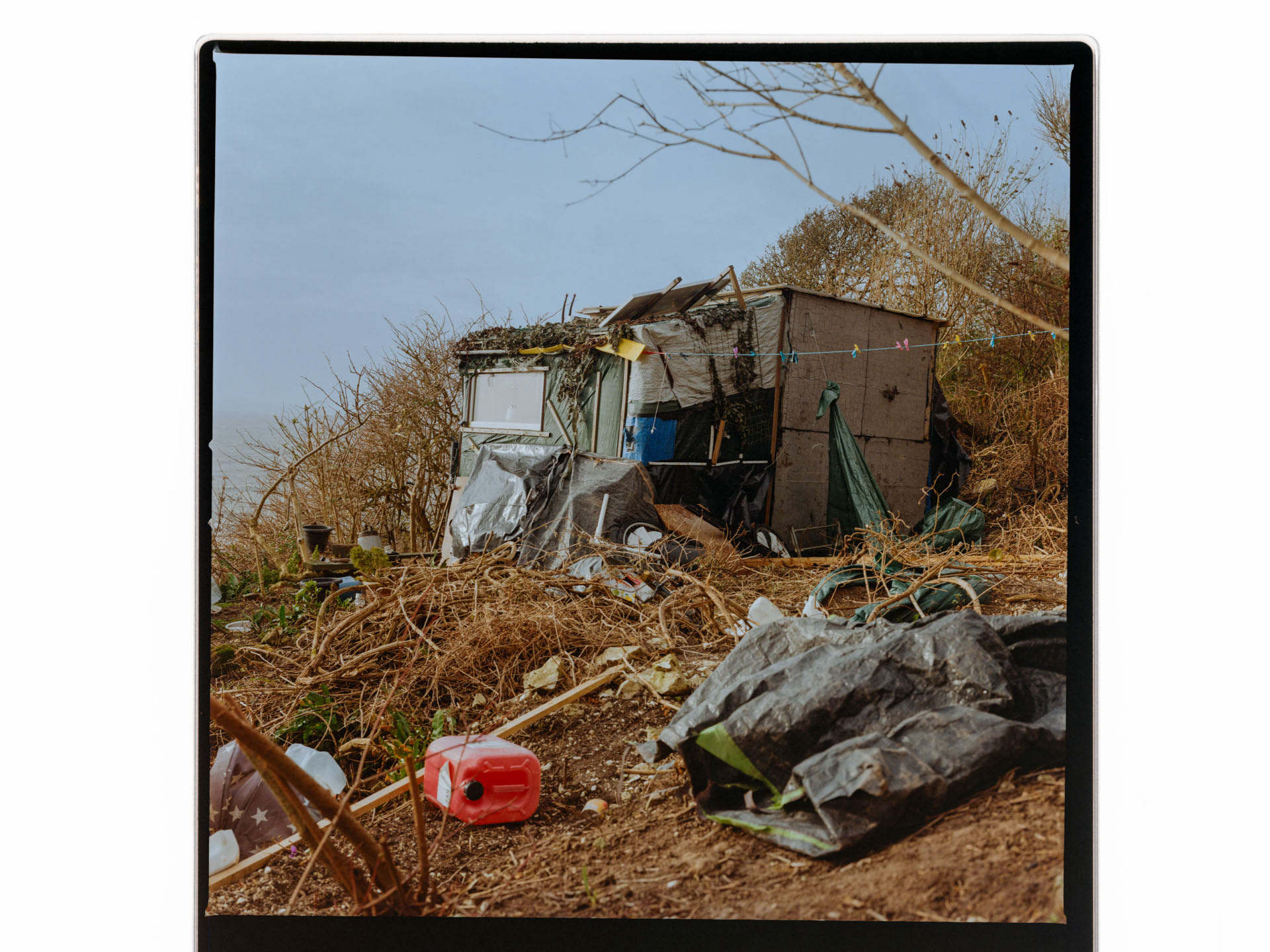
This is Anna’s home. “I plan to extend this out, but the bank is sliding away.” On the very edge of an eroding chalk cliff, whilst the ground beneath her is moving and splitting, she speaks of home improvement
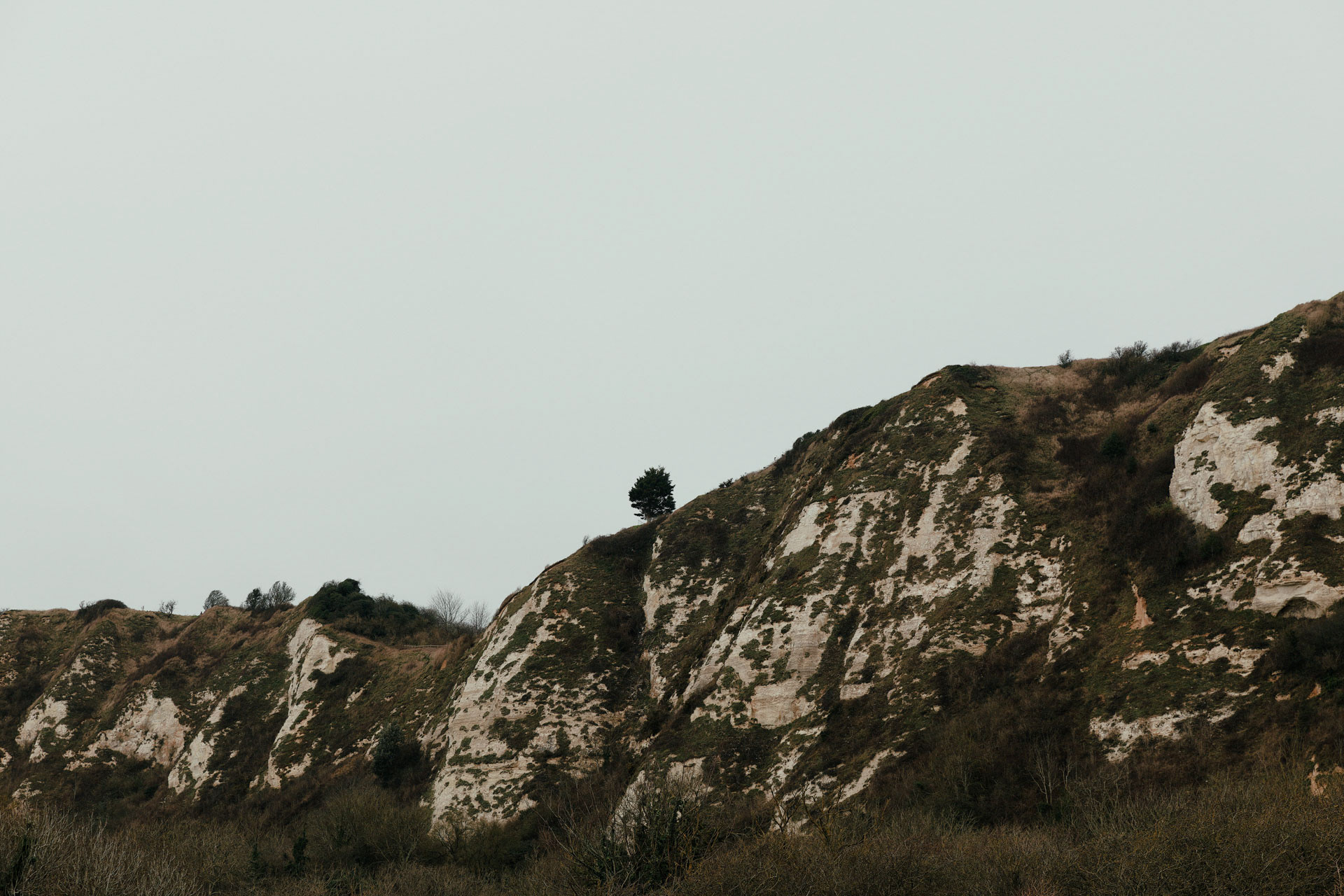
This land mass is moving, gently rotating and sliding towards the sea.
“It’s not slipping, it’s rotating. The ground inland moves down which pushes the cliff forward, and sometimes up. The entire area is rotating. It’s breaking off. You can sometimes feel it, you feel it moving. It shakes.”
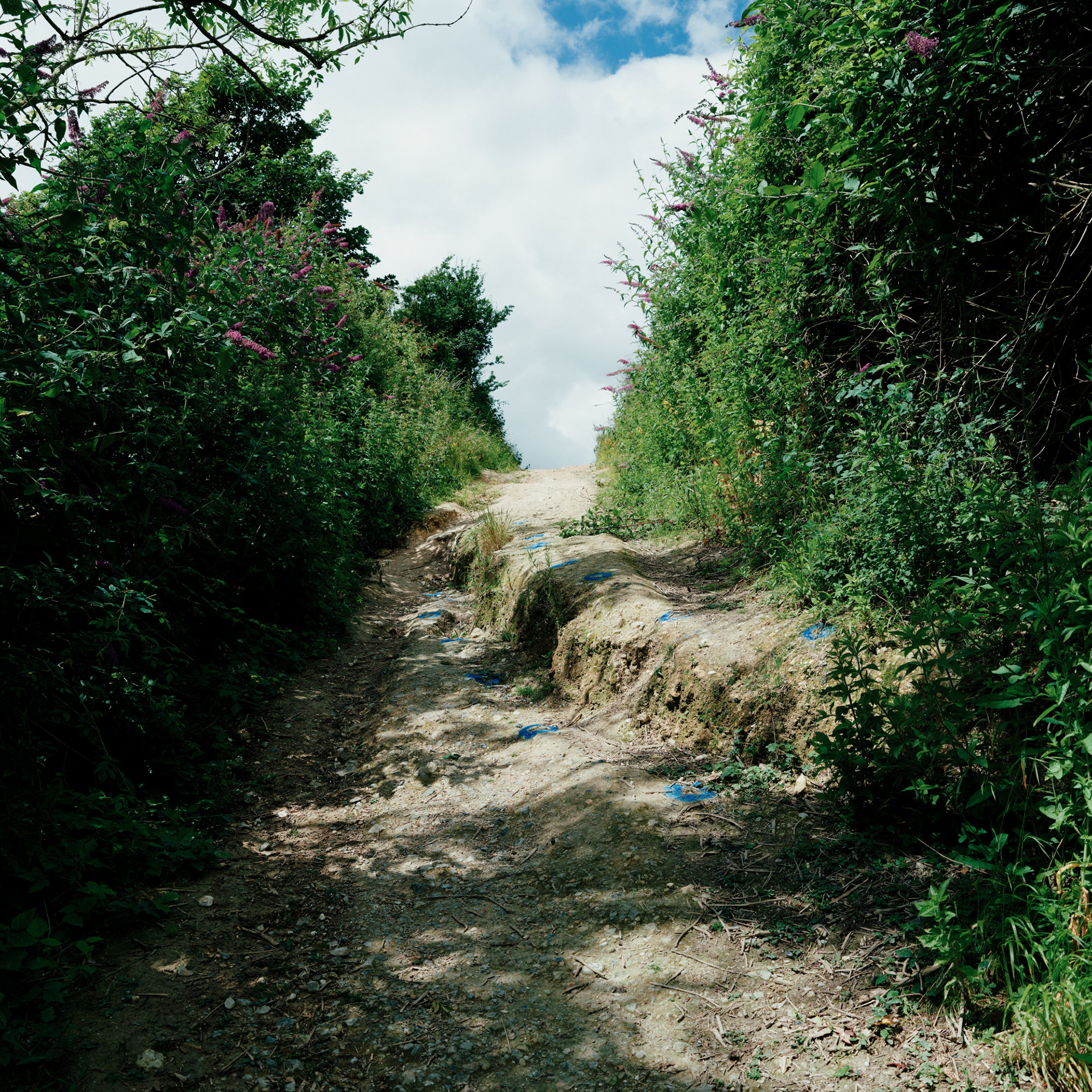
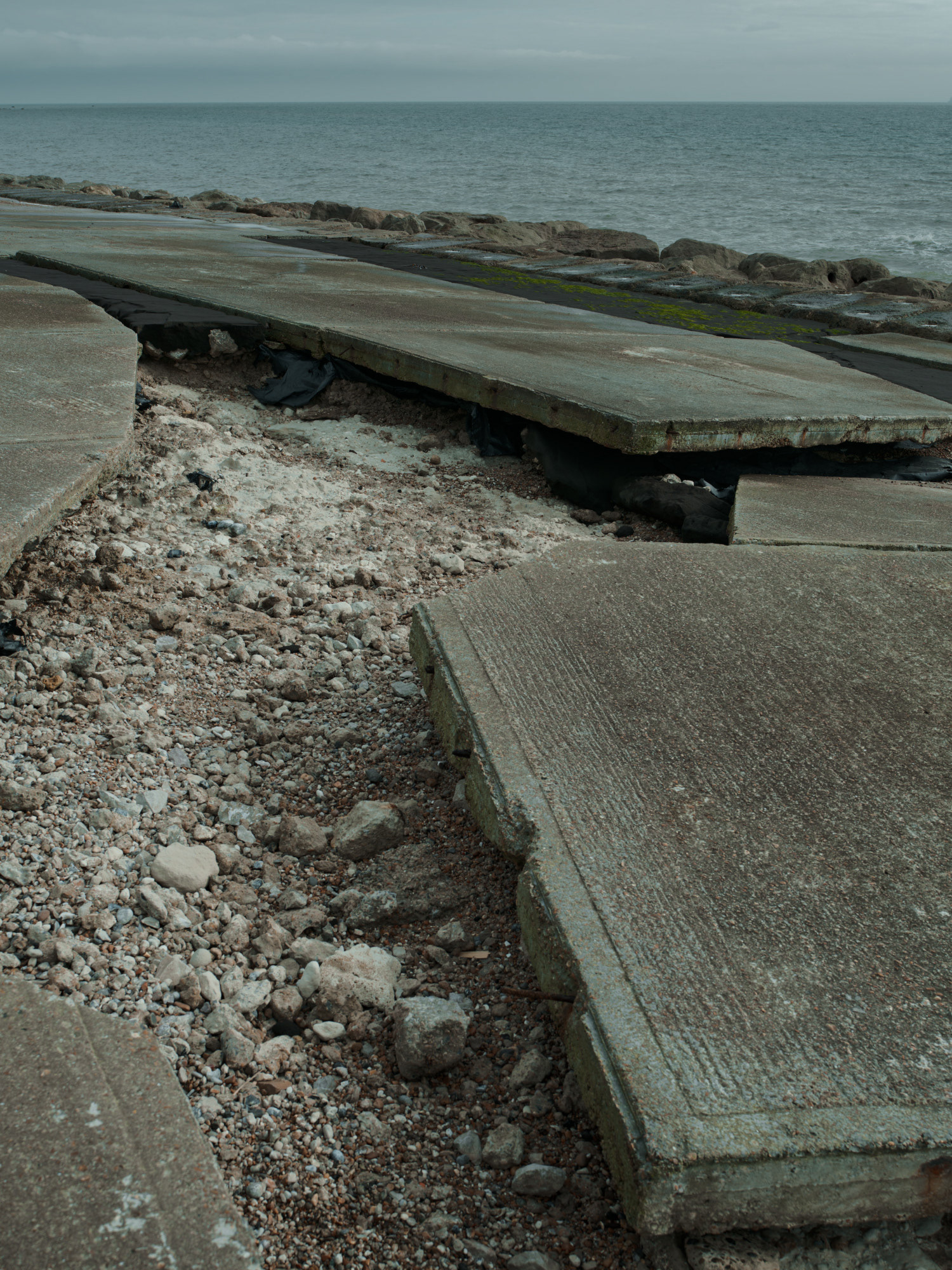
What were once smooth walkable paths are now jagged with steep rises and drops created by the shifting ground, with blue circles used to measure the progression. And where concrete replaces dirt, it cracks and tears. And yet with all of this happening, people continue to build here.
“The land was gifted to the people, we are allowed to be here.”
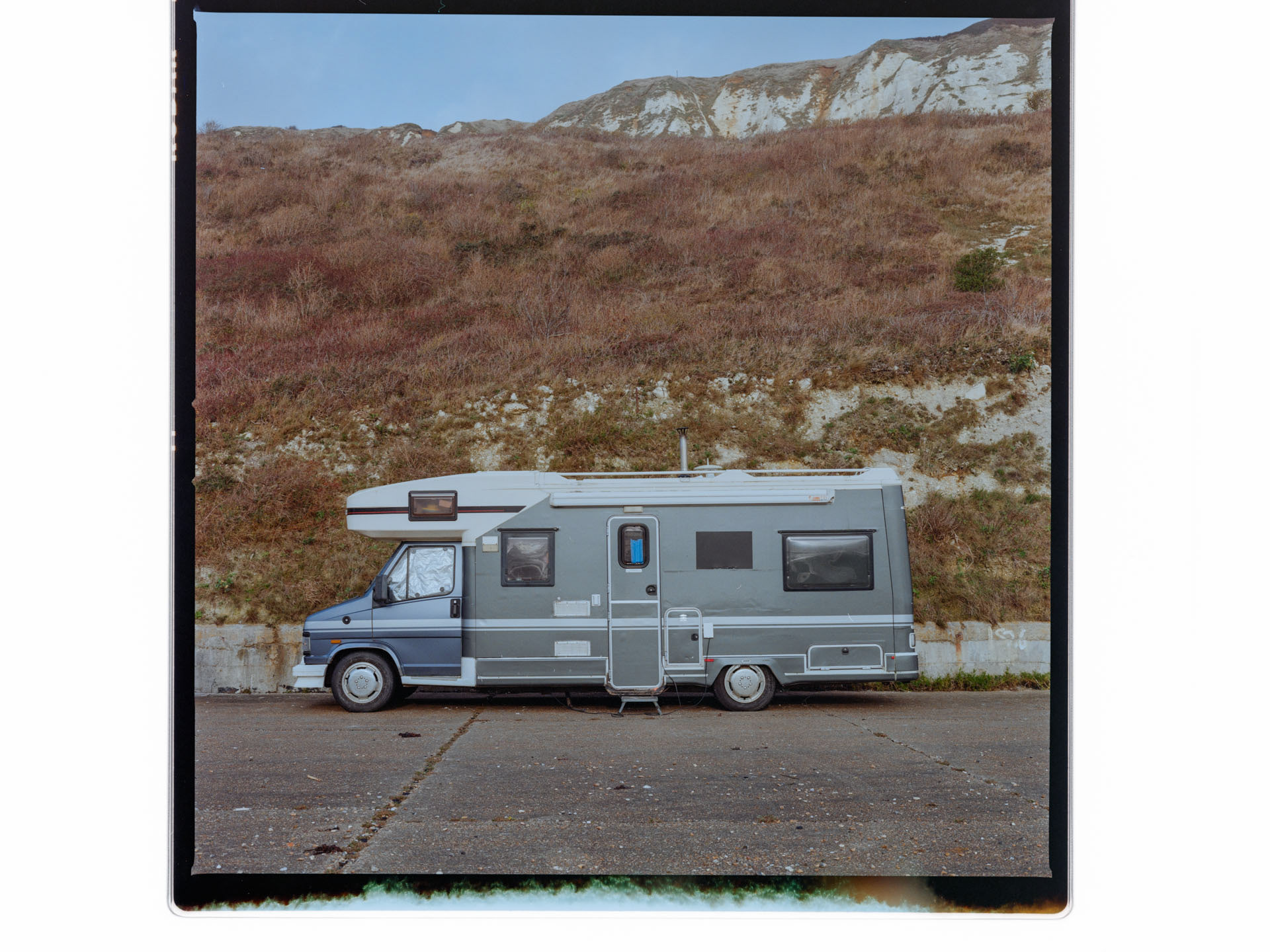
“A friend gave me the key to park here. I’ll be asked to move on. The room is nice but it’s not easy to park up. I can’t exactly hide it."
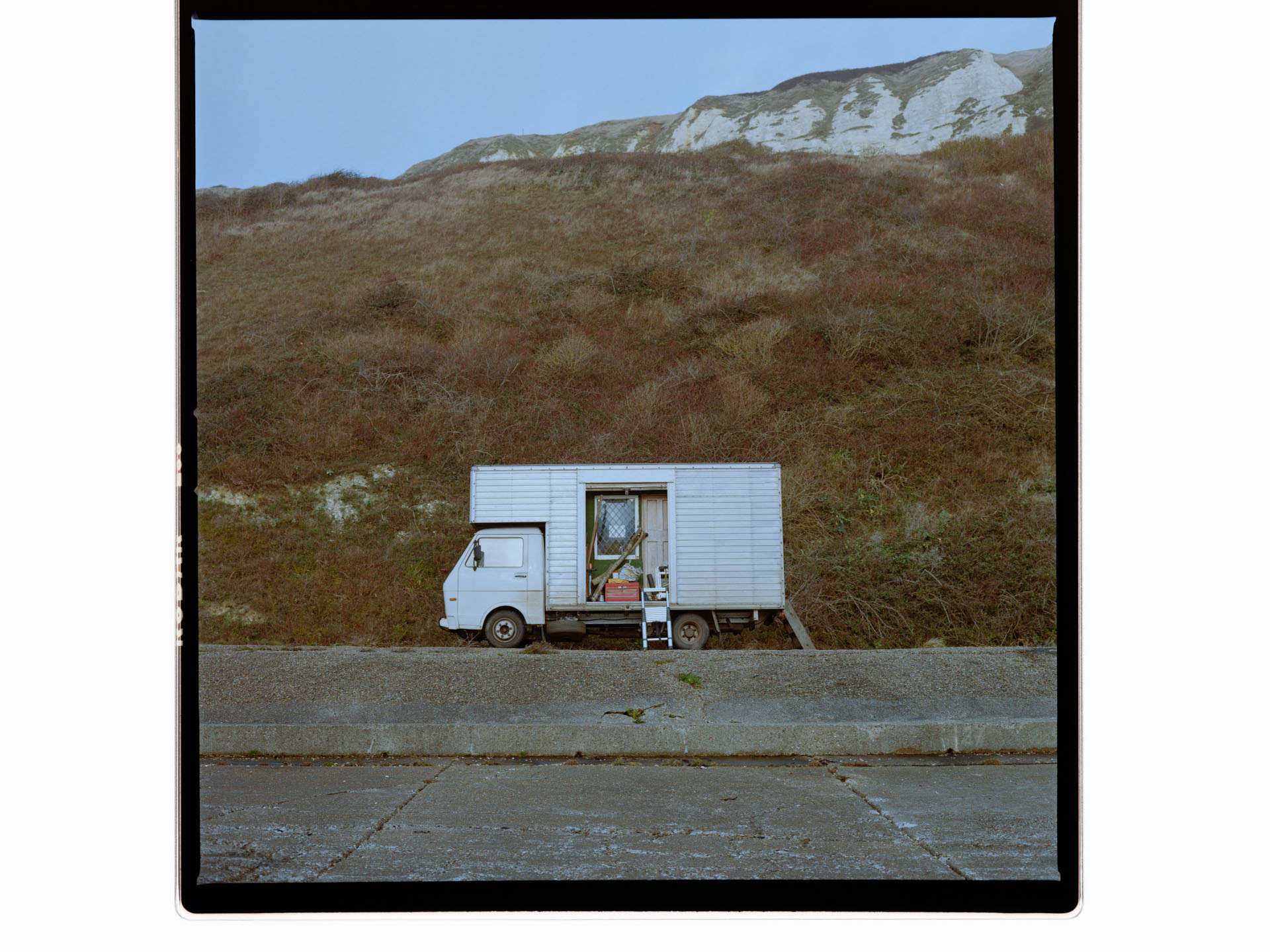
This converted white van offers more privacy for its owner. “With the sides shut no one can tell. I can park anywhere. I prefer quiet places with less people ya know, less questions. I like to be left alone.”
Two hours later they are both gone.
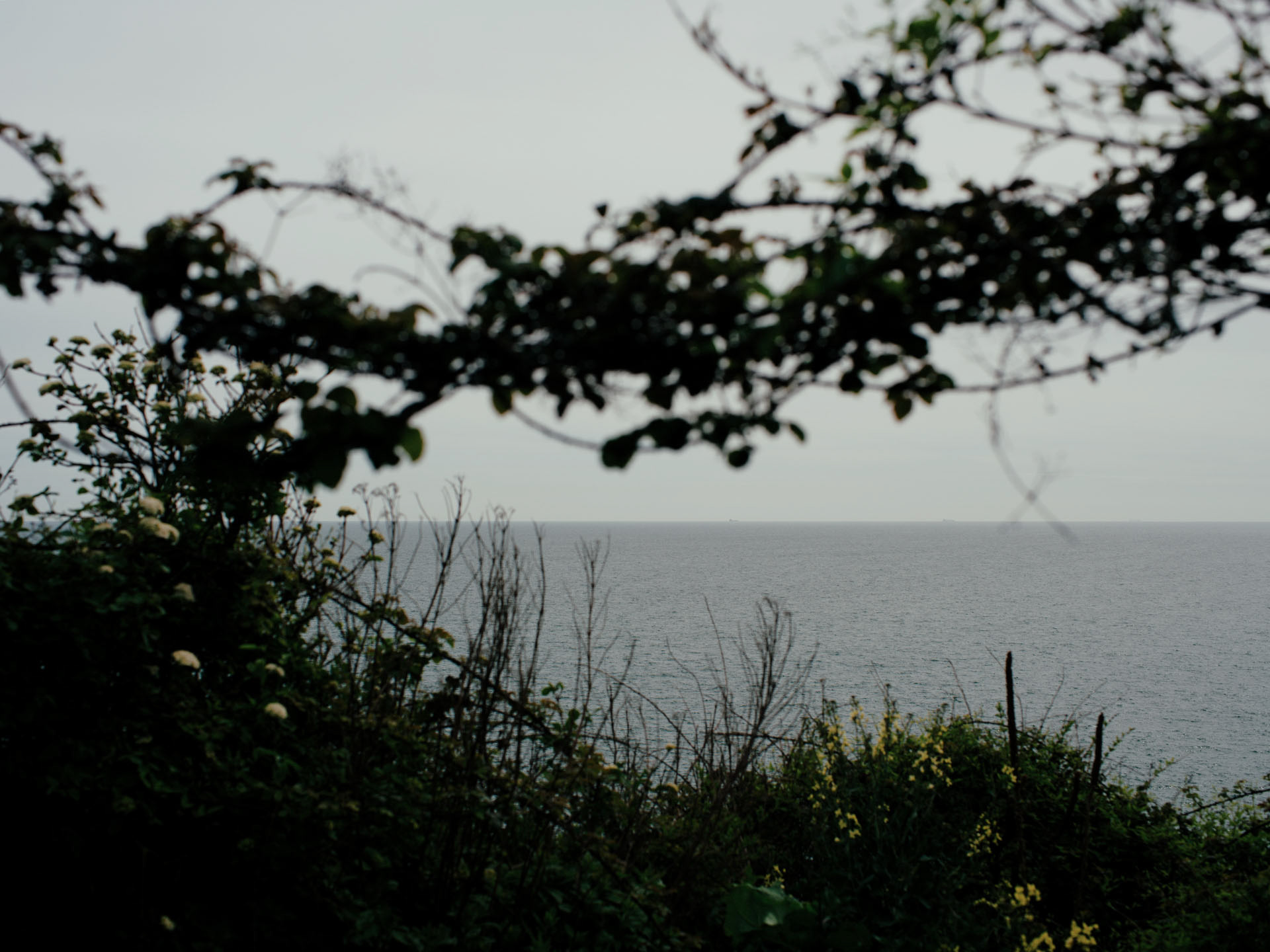
After a year, I return to find the people living here gone, there homes vanished or partially pulled down. There are apparently two people left, neither of them know me or wish to. Those that I knew are gone.
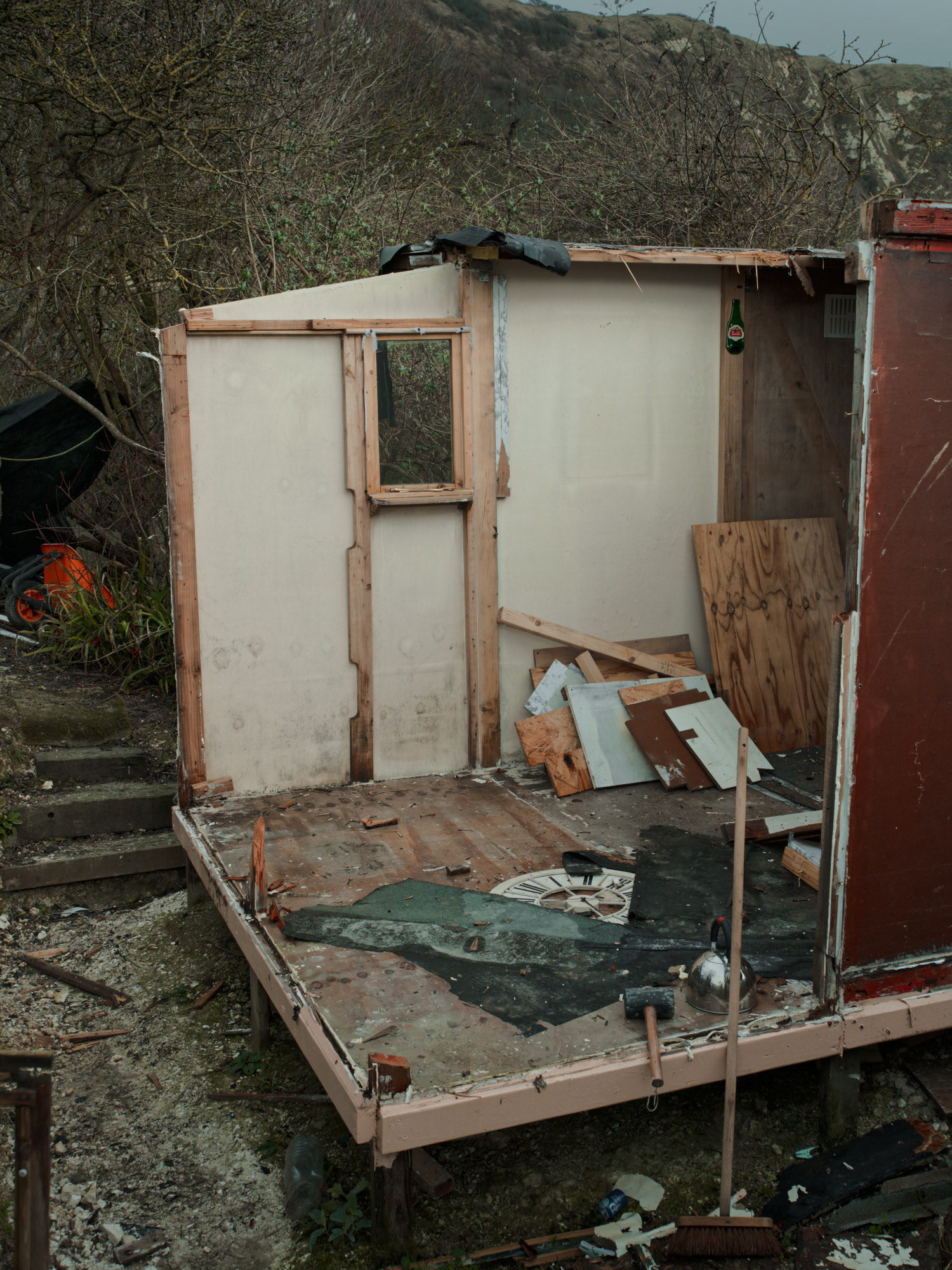
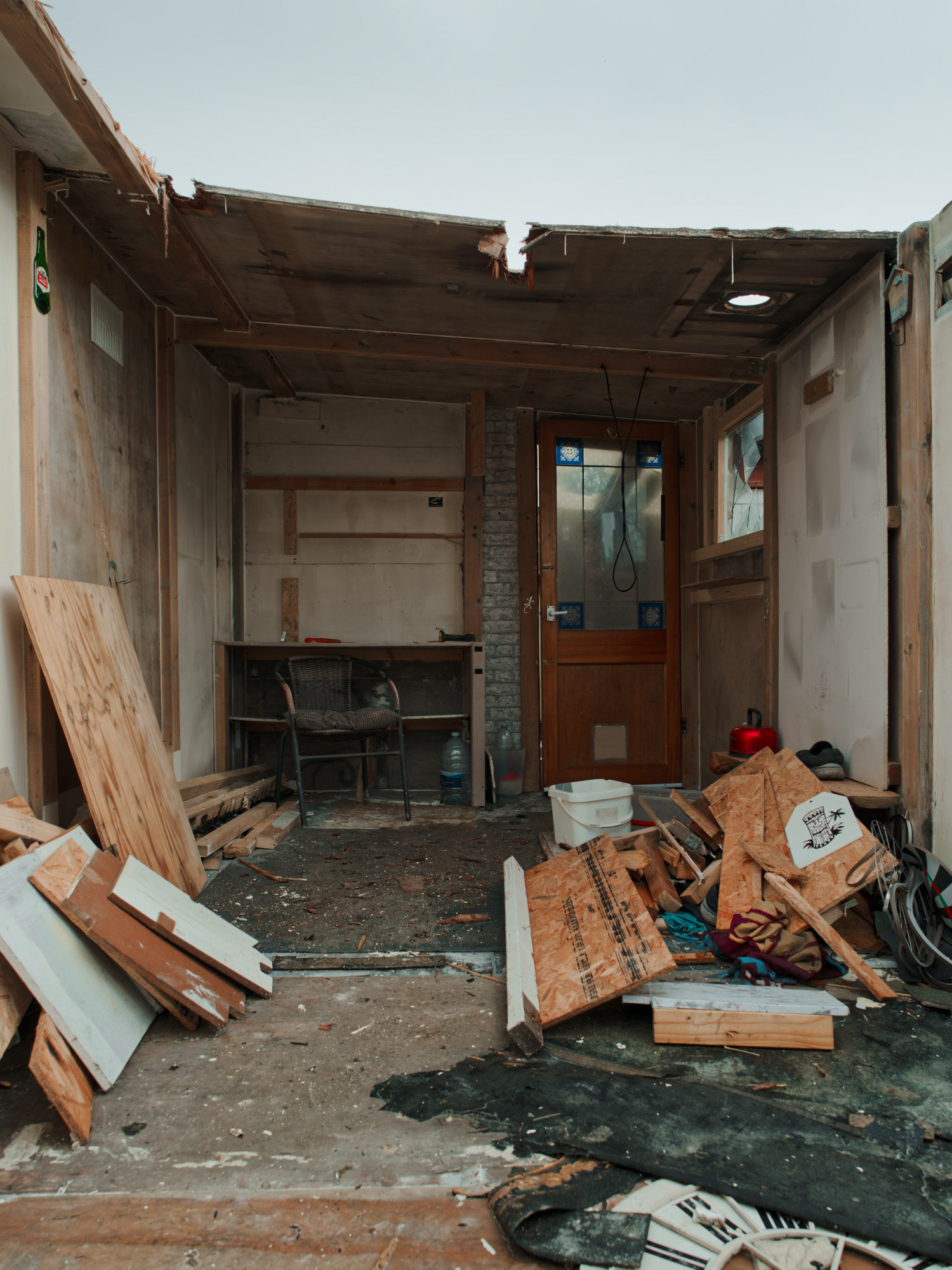
This was Geoff’s home. He lived here with his dog Sonny.
I don’t know what happened to him, but I remember his home. It was tidy, spotless in fact. He took care of his home, he had pride in it, he built it entirely by hand himself. He kept the dirt out, he’d make you stand on newspapers to keep his floor clean. He did not contaminate this land, he grew food on it. He cared for and paid attention to all I saw him do. To see his home like this makes me deeply sad.
I haven't yet found out where he went.
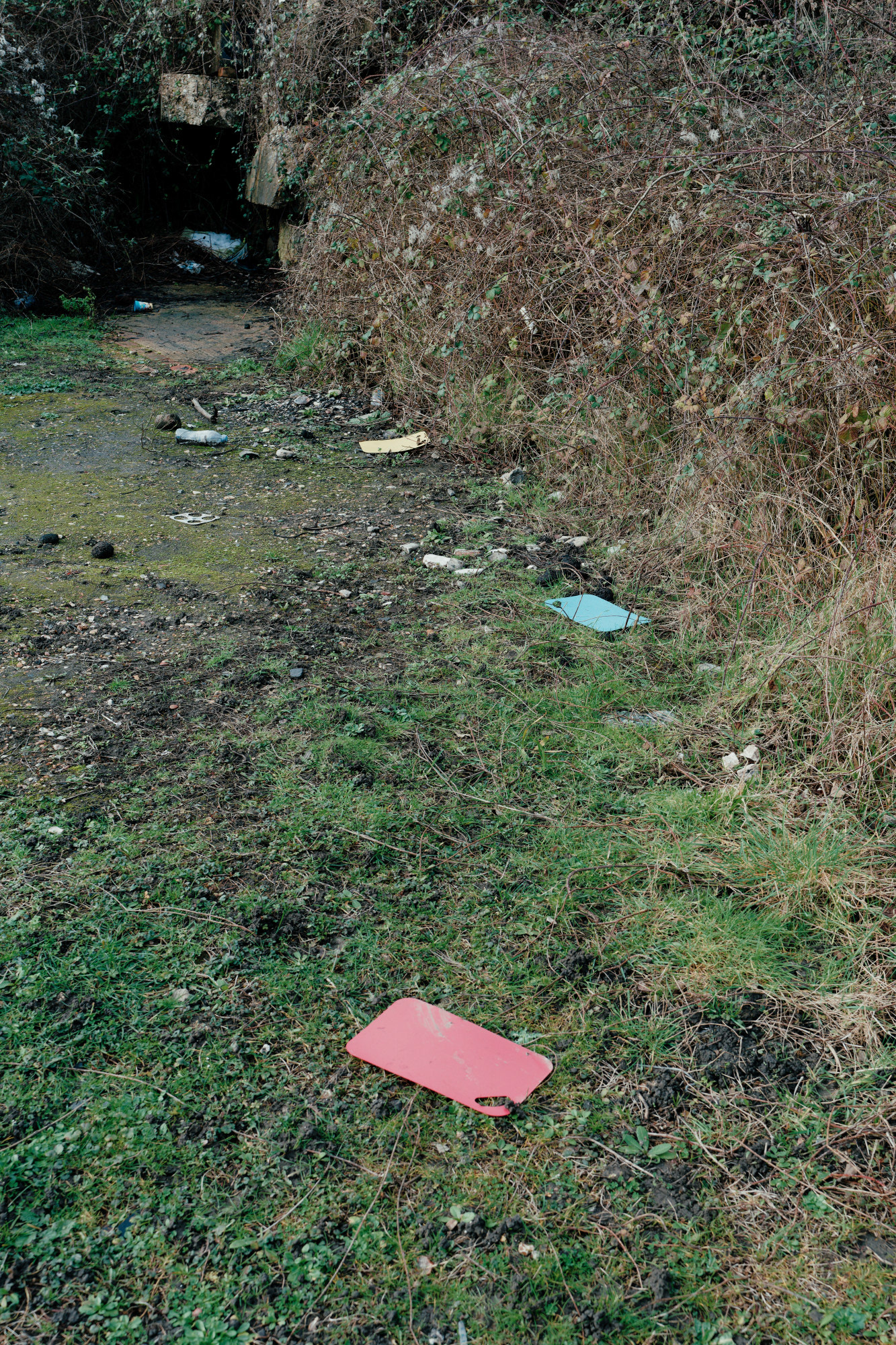
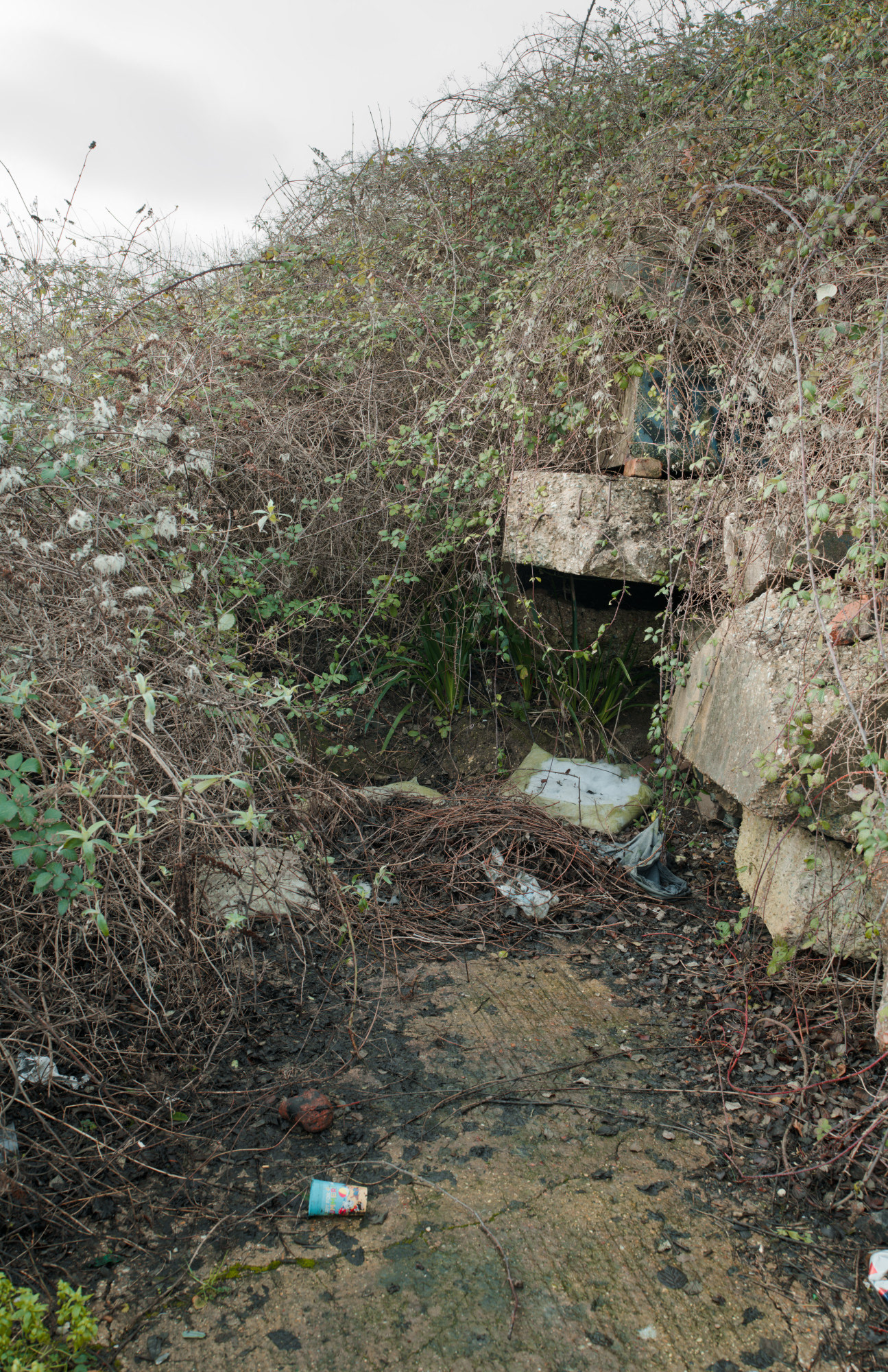
A trail of primary colours leads me to a sheltered space between the hedges and the remnants of a structure, now collapsed.
Here I speak to Peter, who is living here inside of this crawl space between the broken concrete slabs.
“The wind tore the tent. All of the stuff is wet.”
His brother Daniel has walked to town to find a new shelter and maybe some more bedding. For now they use the crawl space to sleep, and sit by the beach fishing during the day.
“The towns are dangerous. You can’t hide from anyone there. The people don’t want us.”
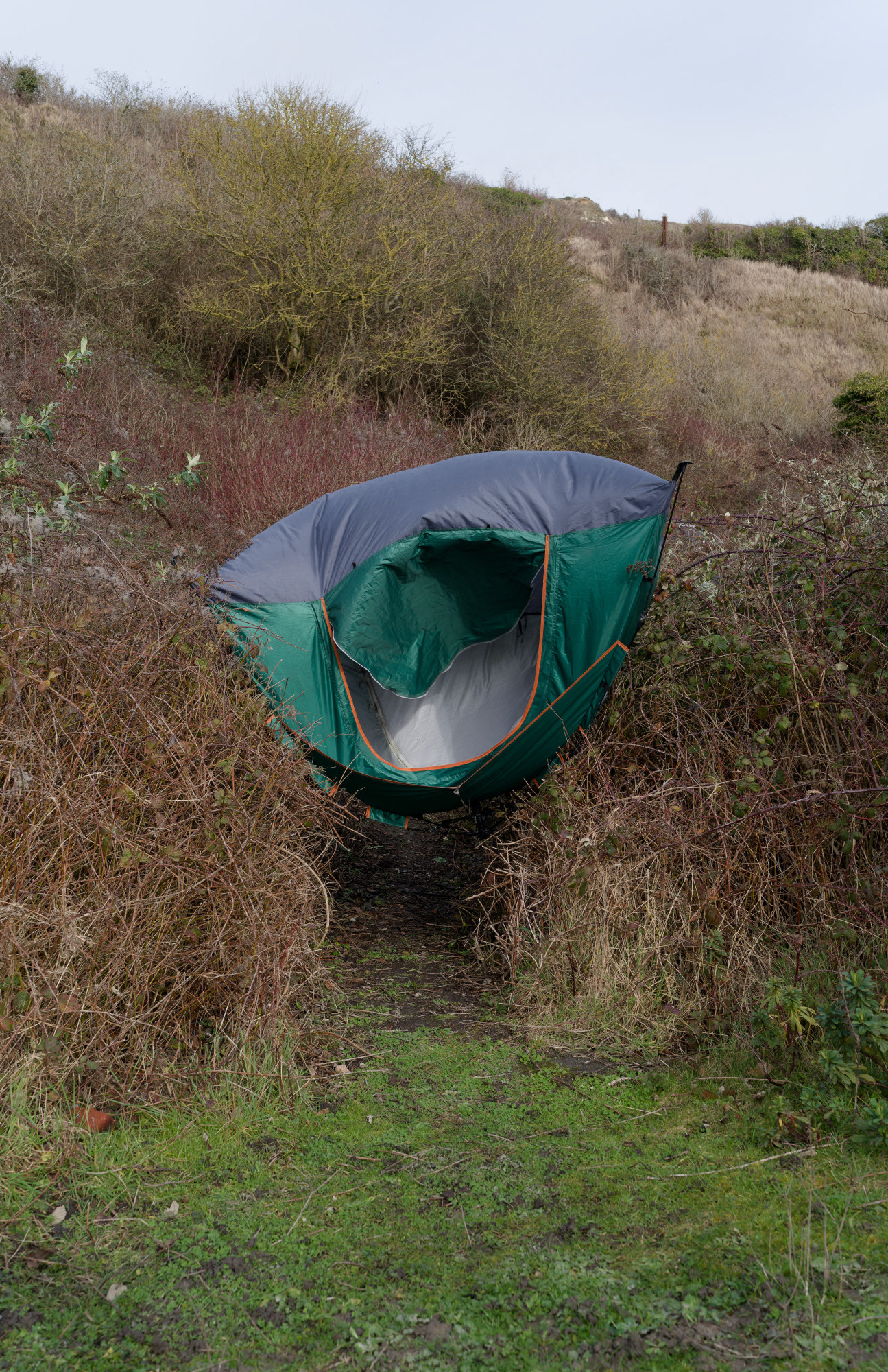
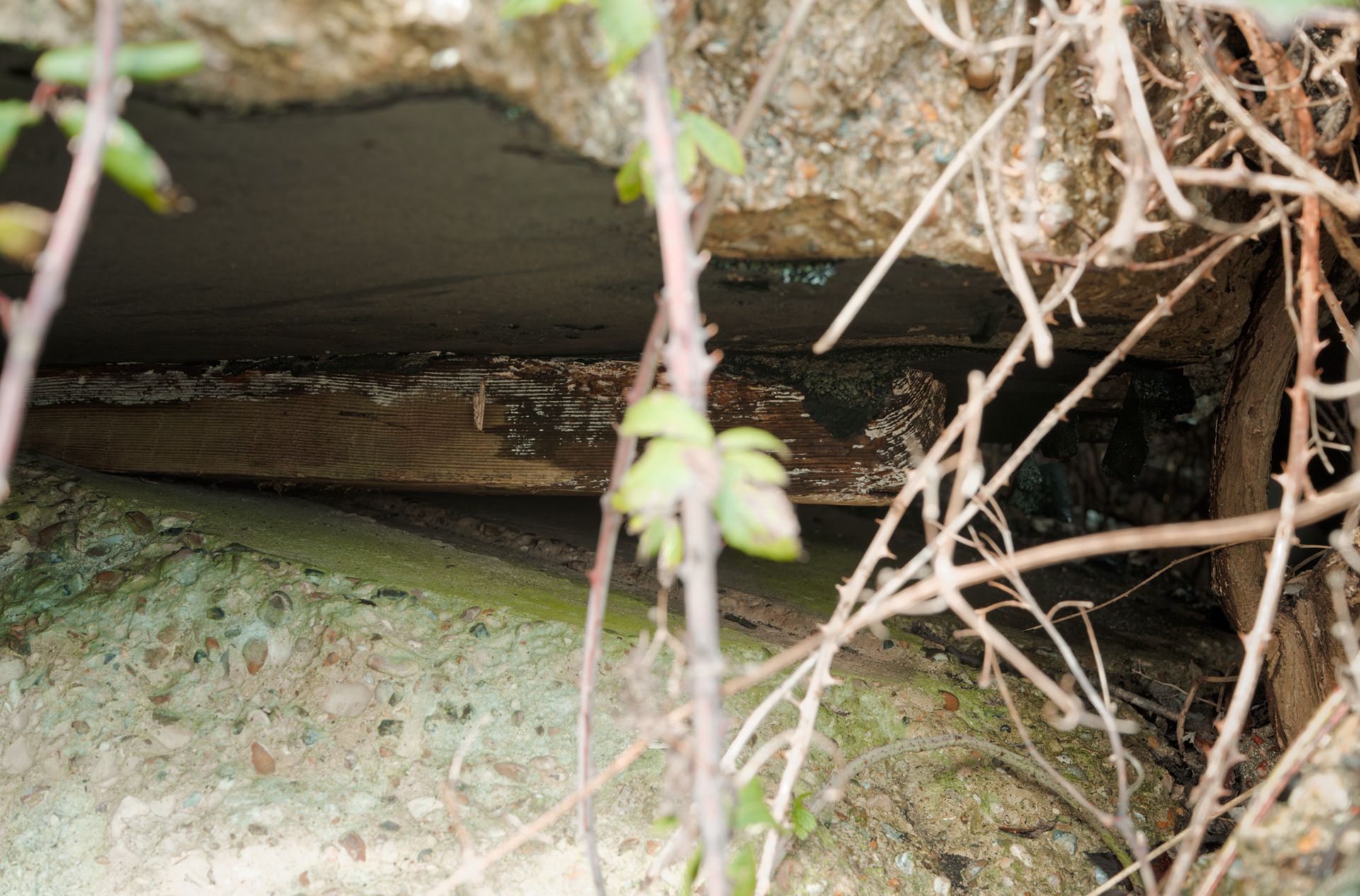
An intact tent lying upside down in the hedge would offer a temporary, and certainly more comfortable, alternative. But I am told “that’s Pillbug’s tent. He leaves it there to dry out.”
In an almost childlike way, Peter pushes himself back into his impossibly claustrophobic temporary home to wait for his brother’s return.
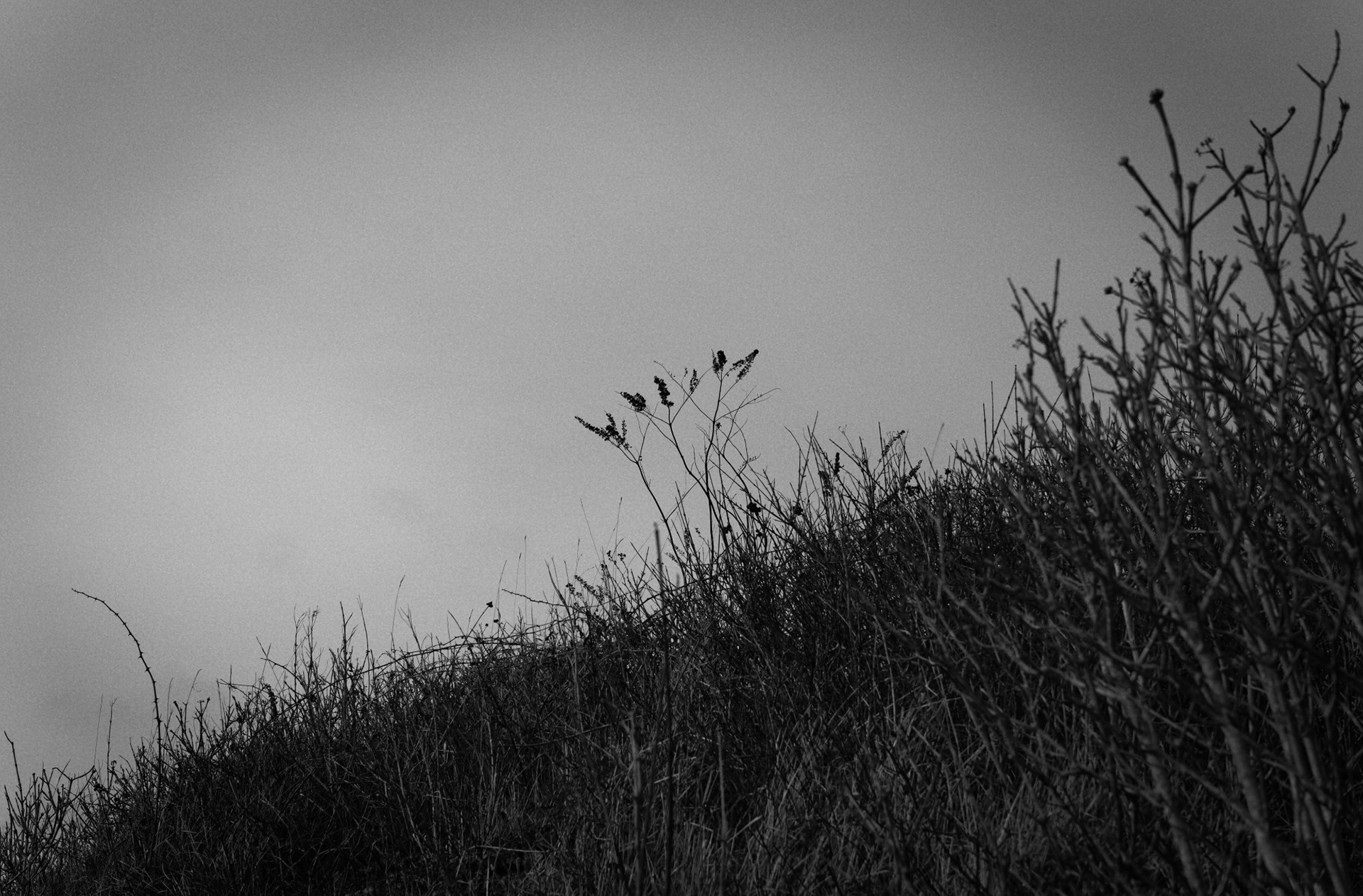
Pylon Town
On a piece of land reaching into the Thames river I find a small community. On contaminated areas, in wooden shacks that are rotting into the ground and being taken by the waters, people build.
They are looking for escape, to disappear. They find places that are distant. To them the damp wood, the cold, the risks and difficulties associated with living in these places far outweigh the damage done to them by a society that refuses to understand them. They feel like outcasts, and if they could they’d move further away. But as much as they choose to step back from society, they sometimes still need it.
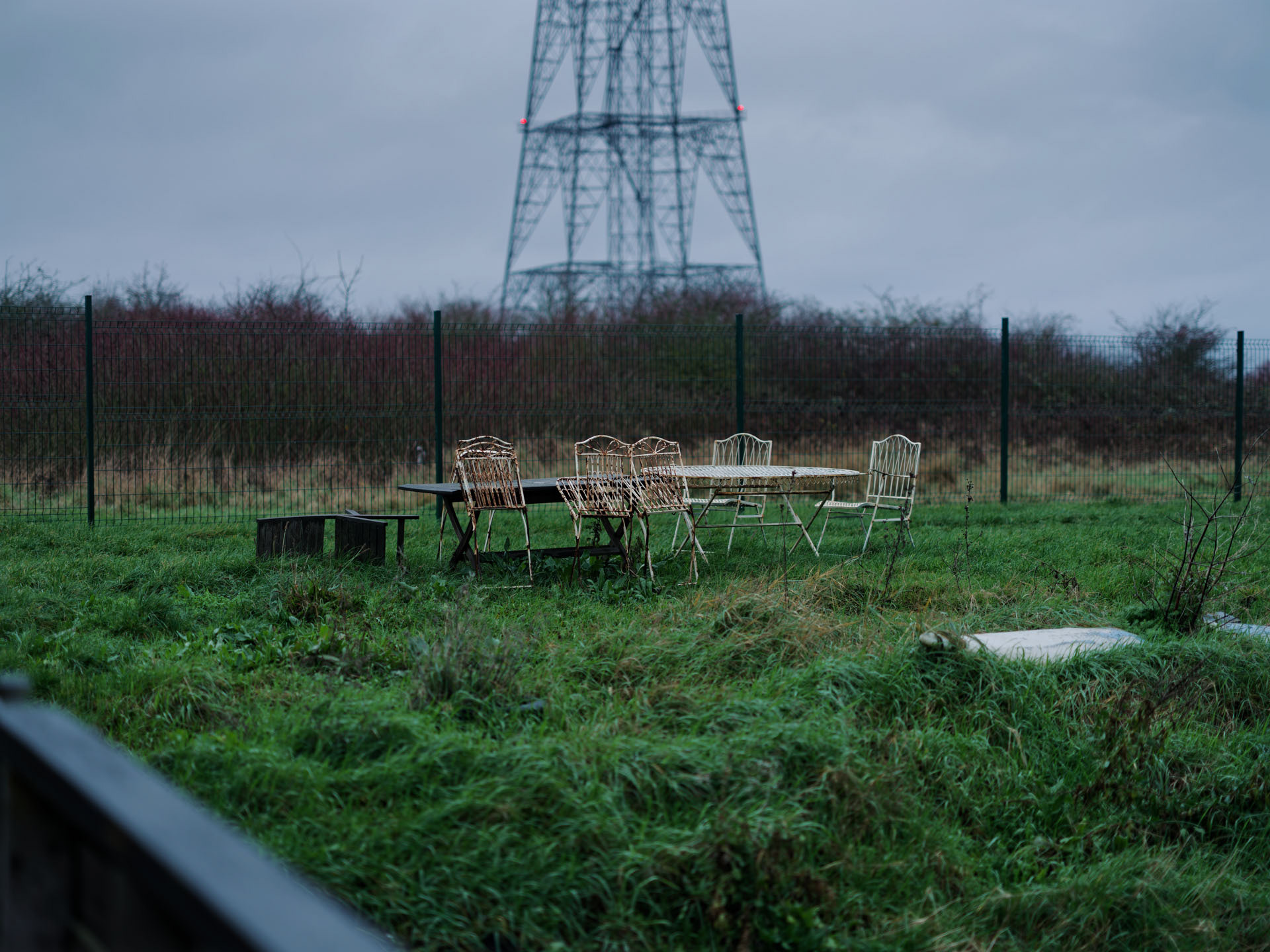
A small and private community lived here, until the land was fenced off and access removed. Restoration projects are abandoned, homes are beginning to leak. The people left so suddenly everything remains behind.
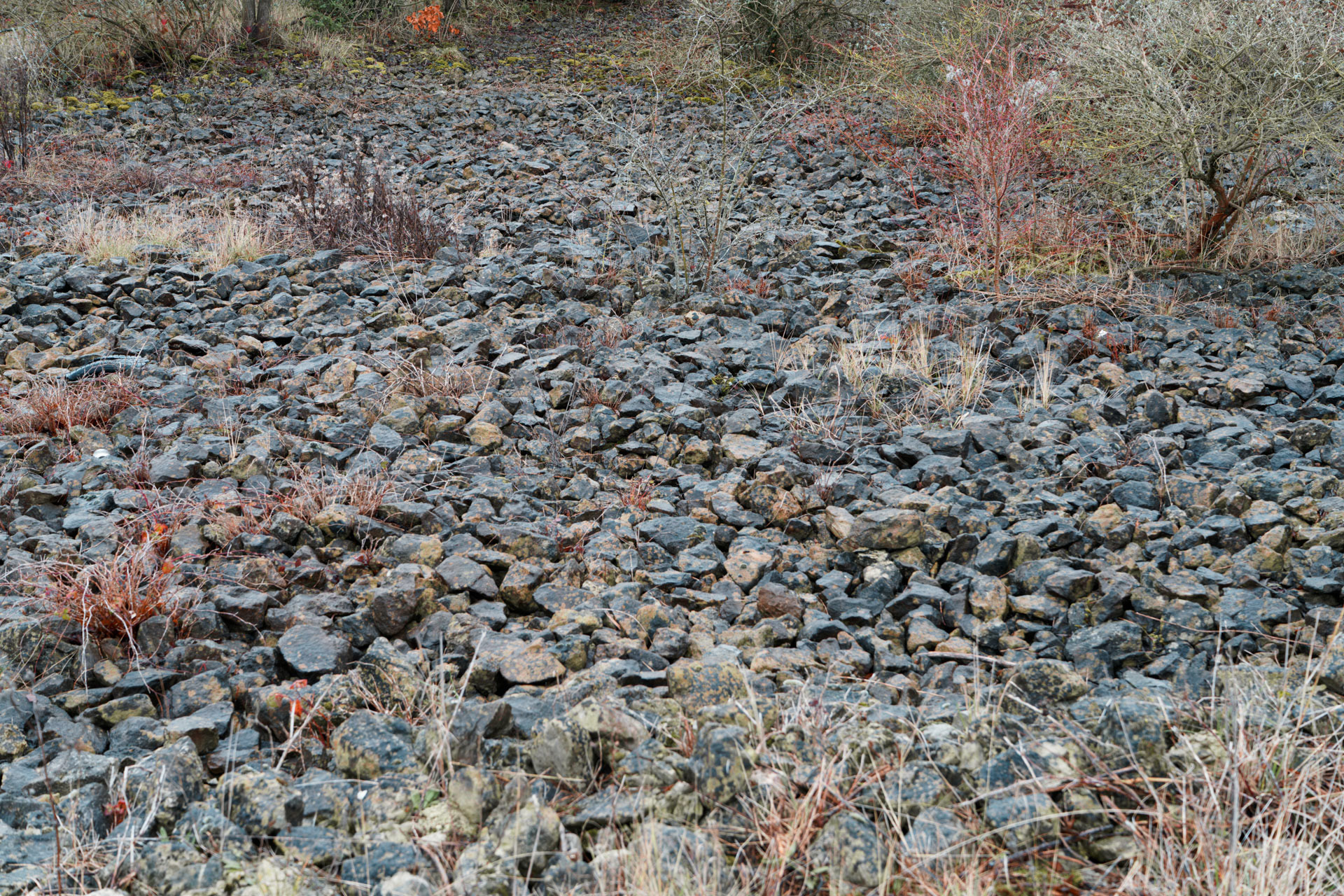
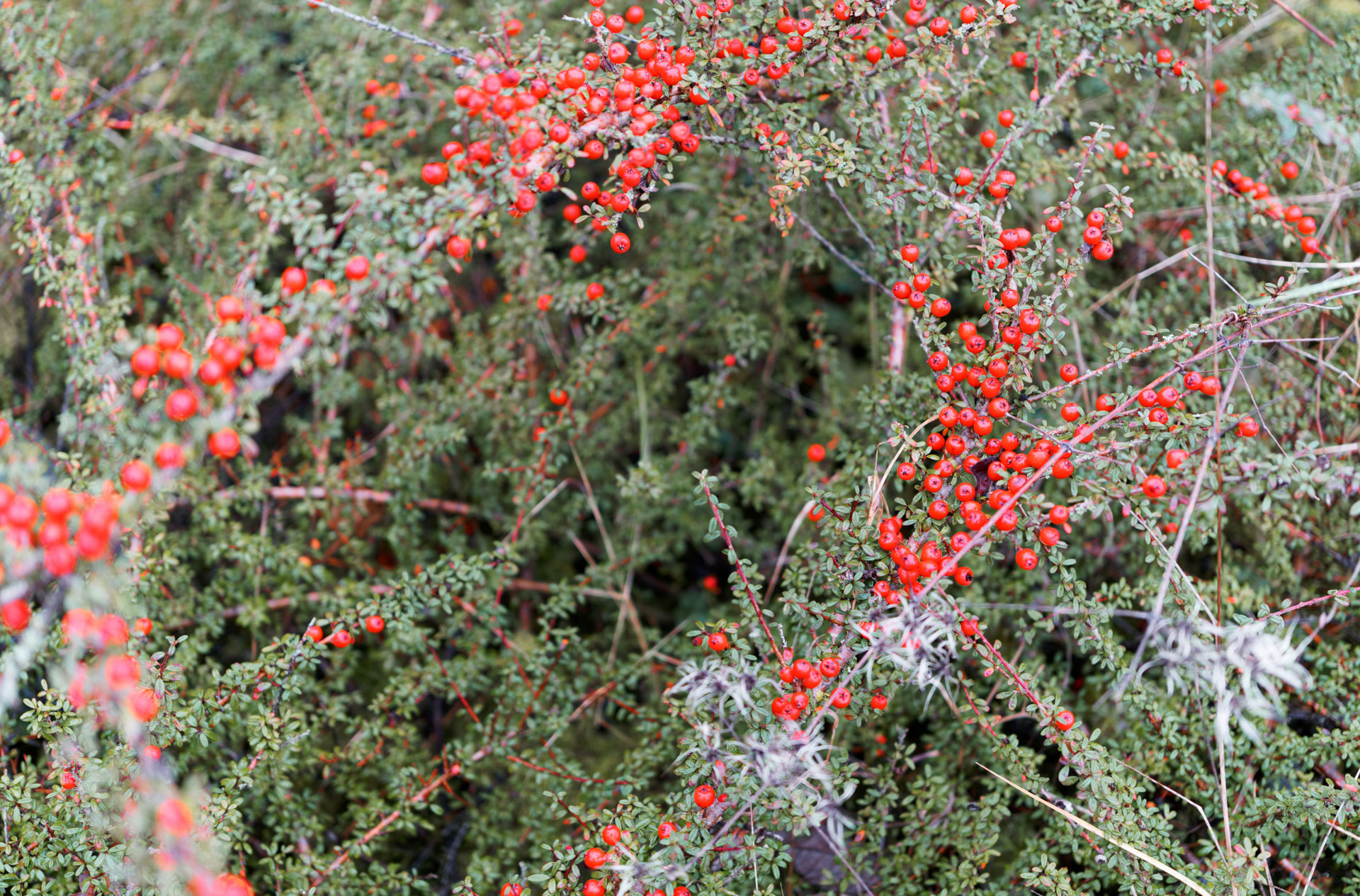
Thick, stern, thorn covered bushes grow in a lunar landscape of homogenous and unnatural looking grey rocks. These bushes are everywhere here, and additional planting is being used to keep people out of the “contaminated zones”.
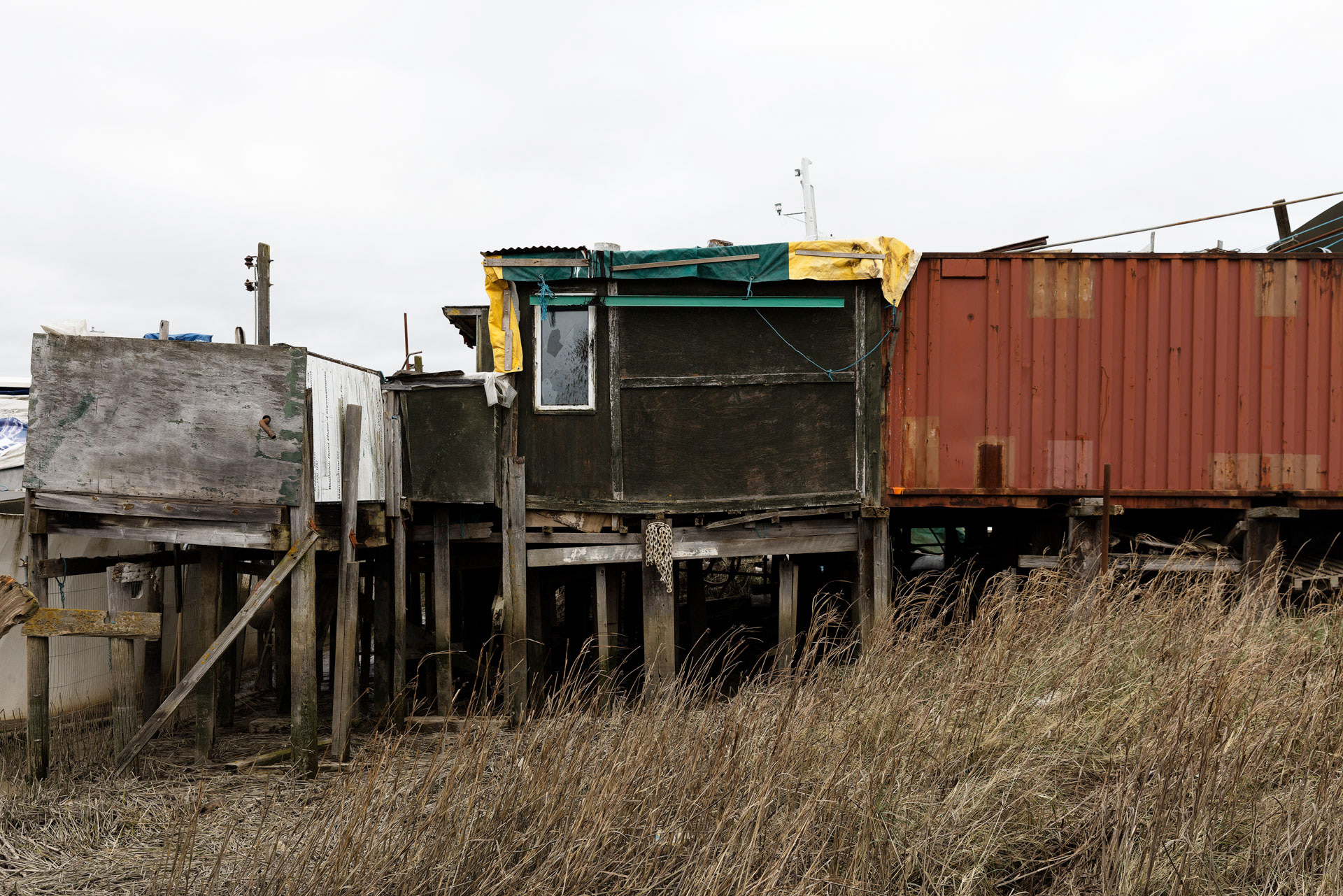
I spoke to Gabel. Convinced this property is still occupied, he says to look for vials and syringes discarded in the reeds.
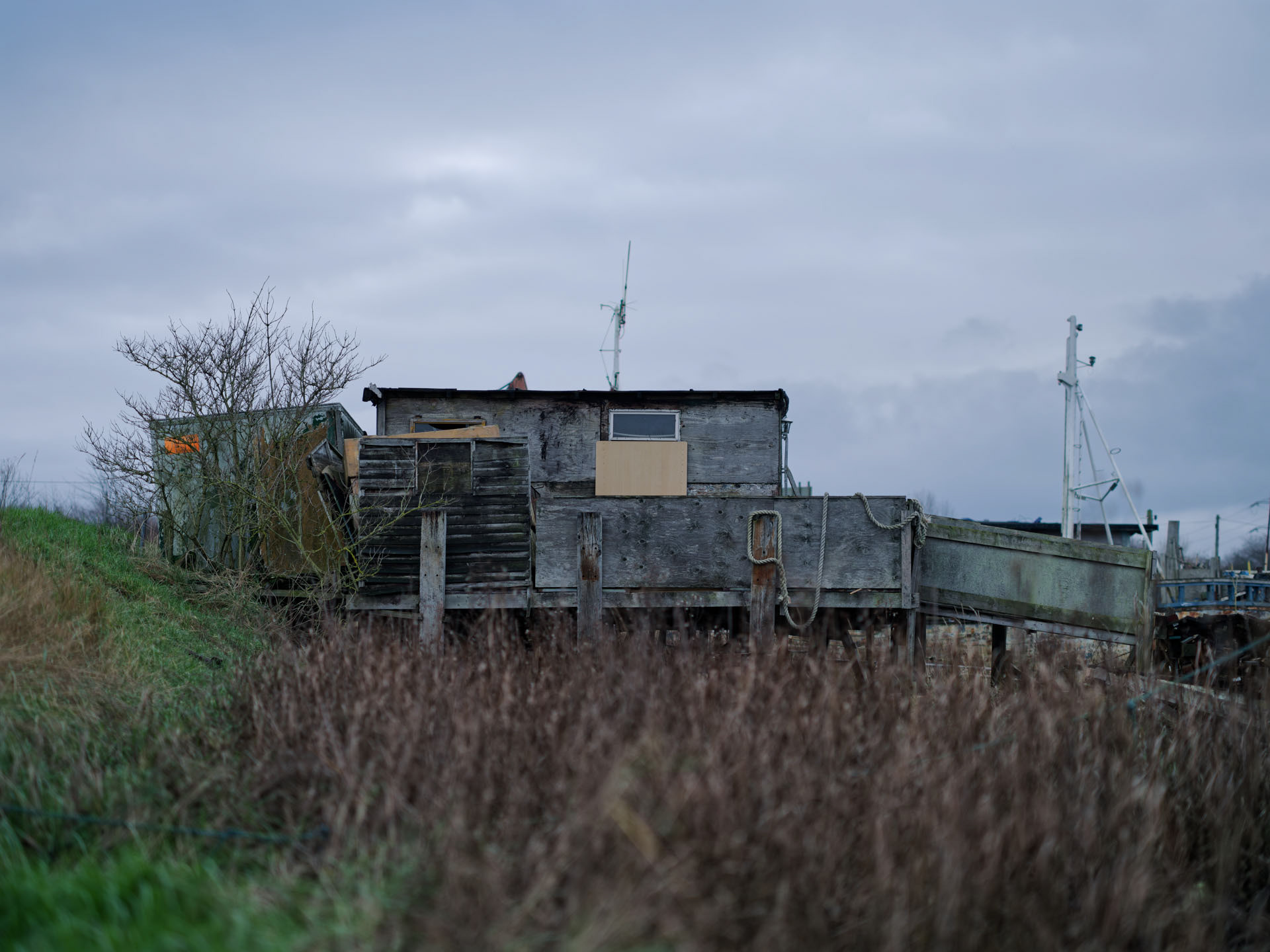
Gabel lives "nearby", but he won’t say where. Something about his smile tells me he has claimed one of these shacks, and this is his home.
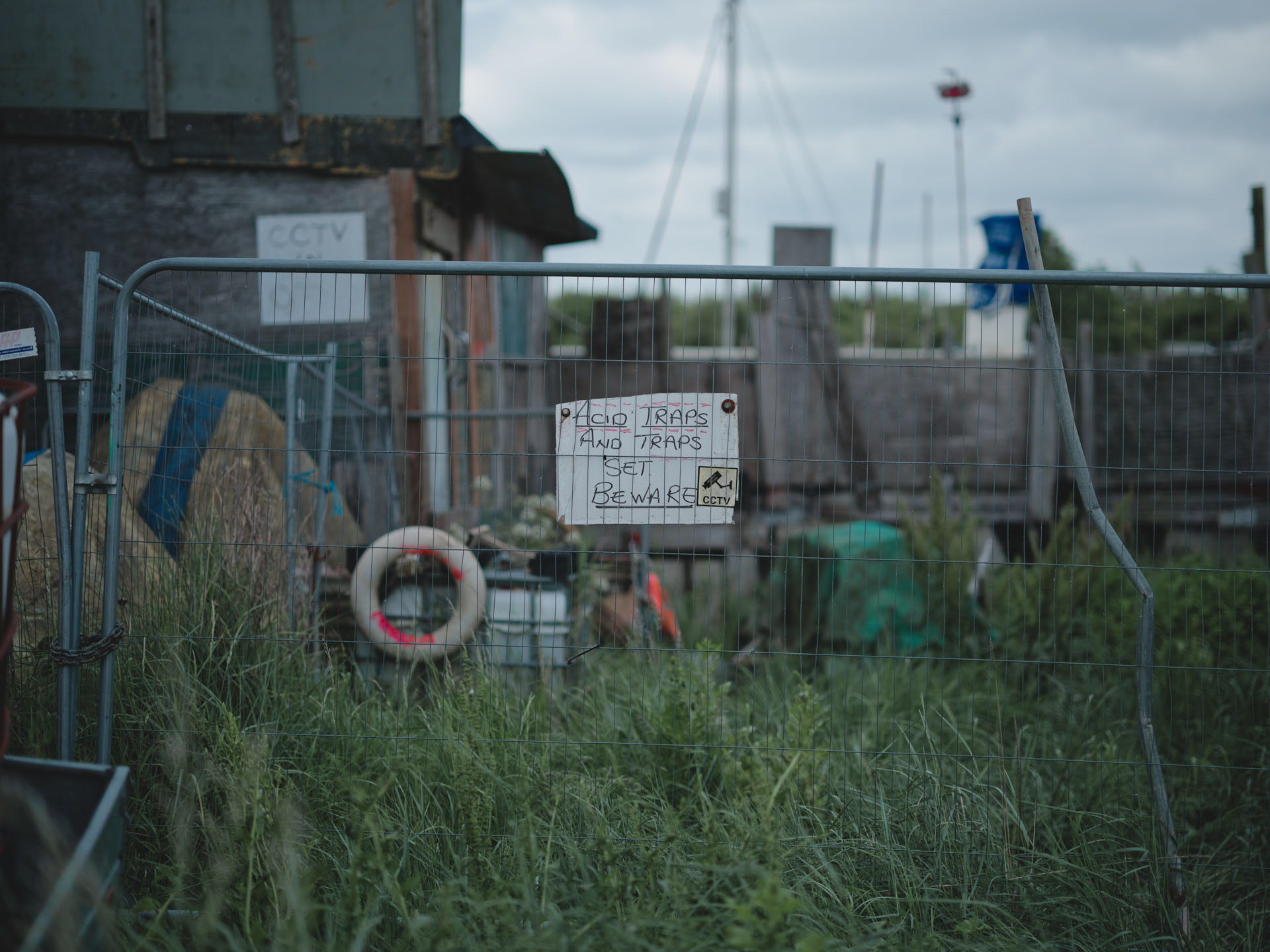
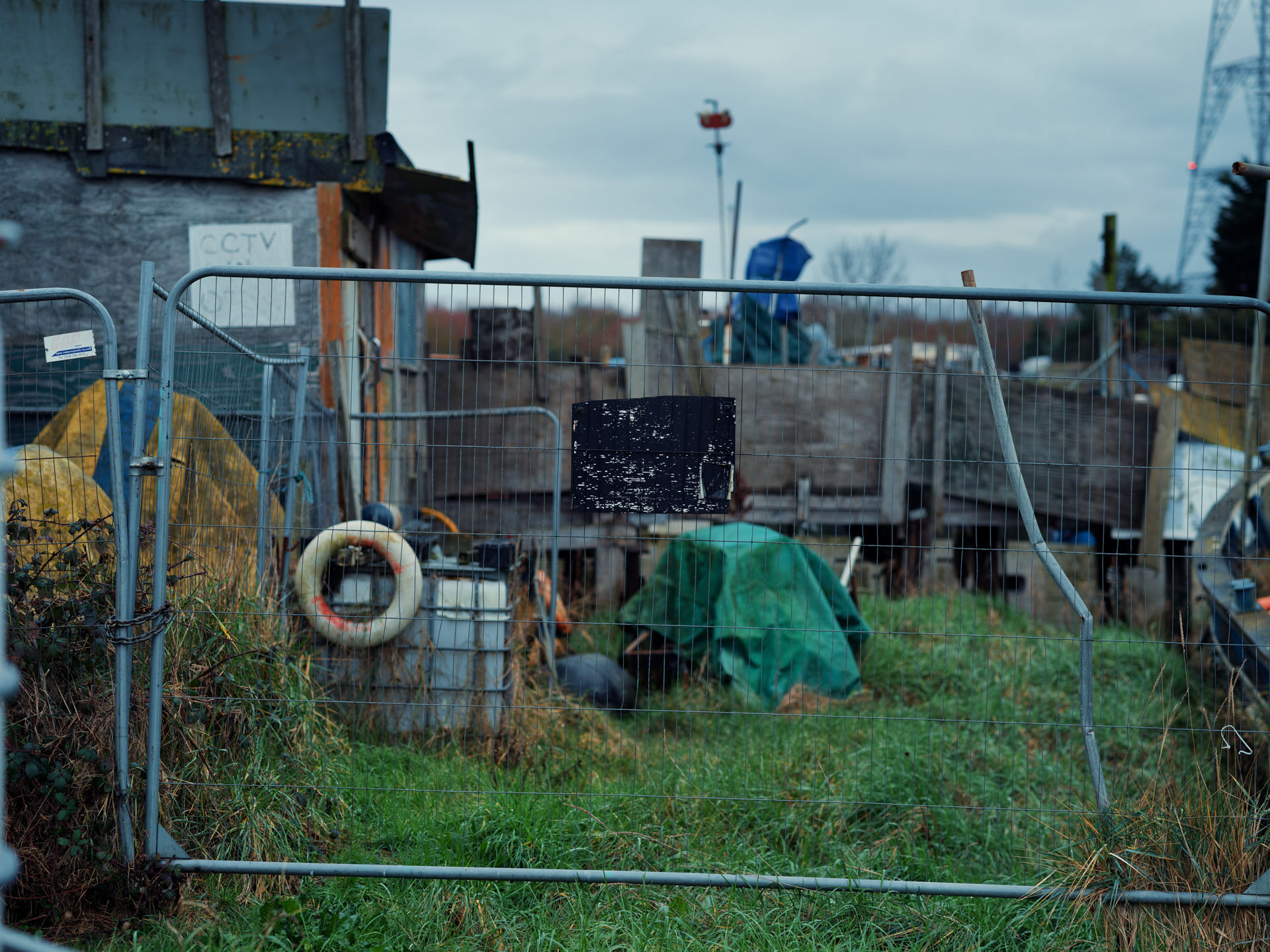
"He keeps to himself" said a local man without a name. "I don't need a name" he told me.
Two years later, the acid traps have now been removed, or the disposition to warn visitors has worn out.
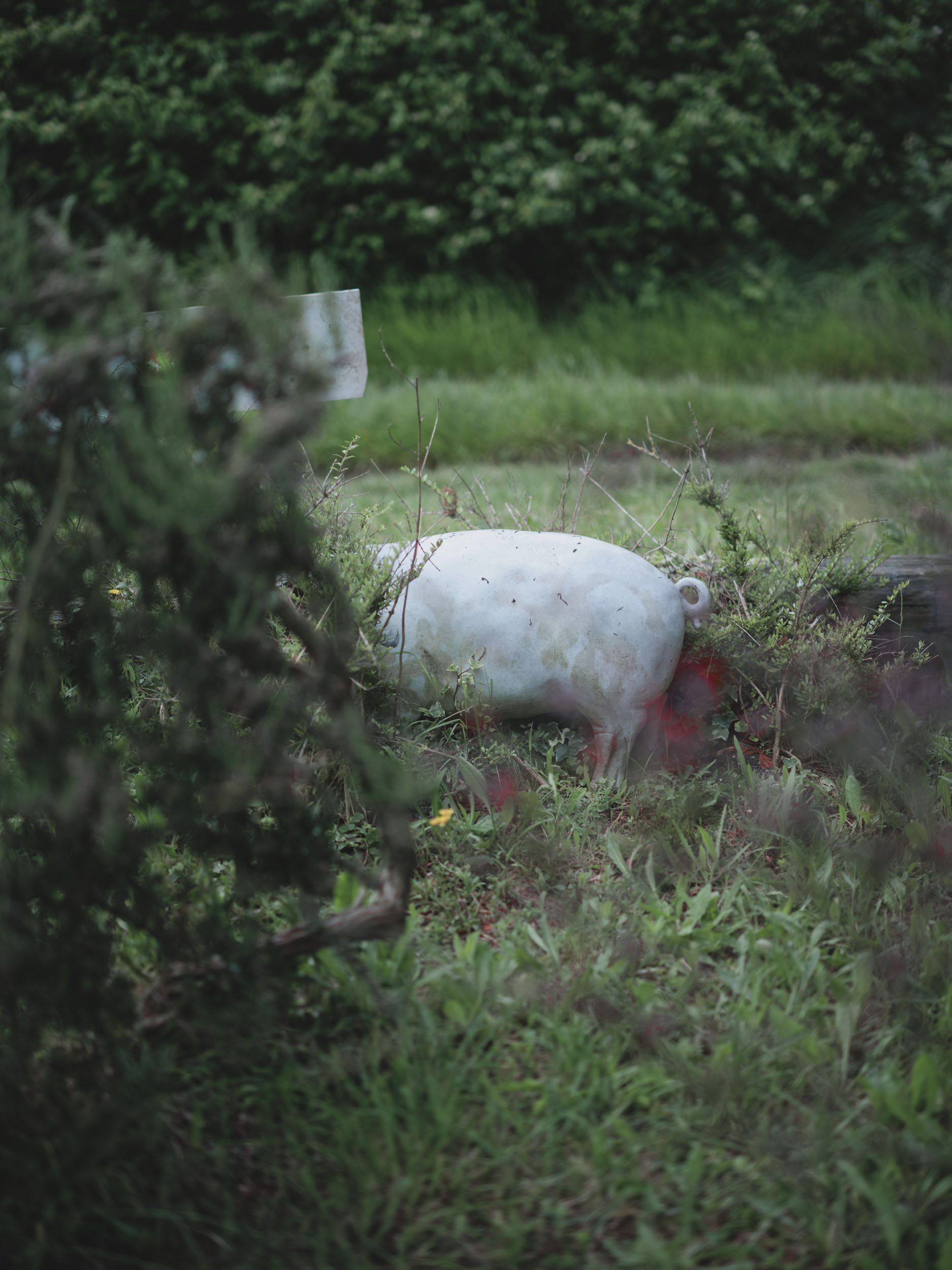
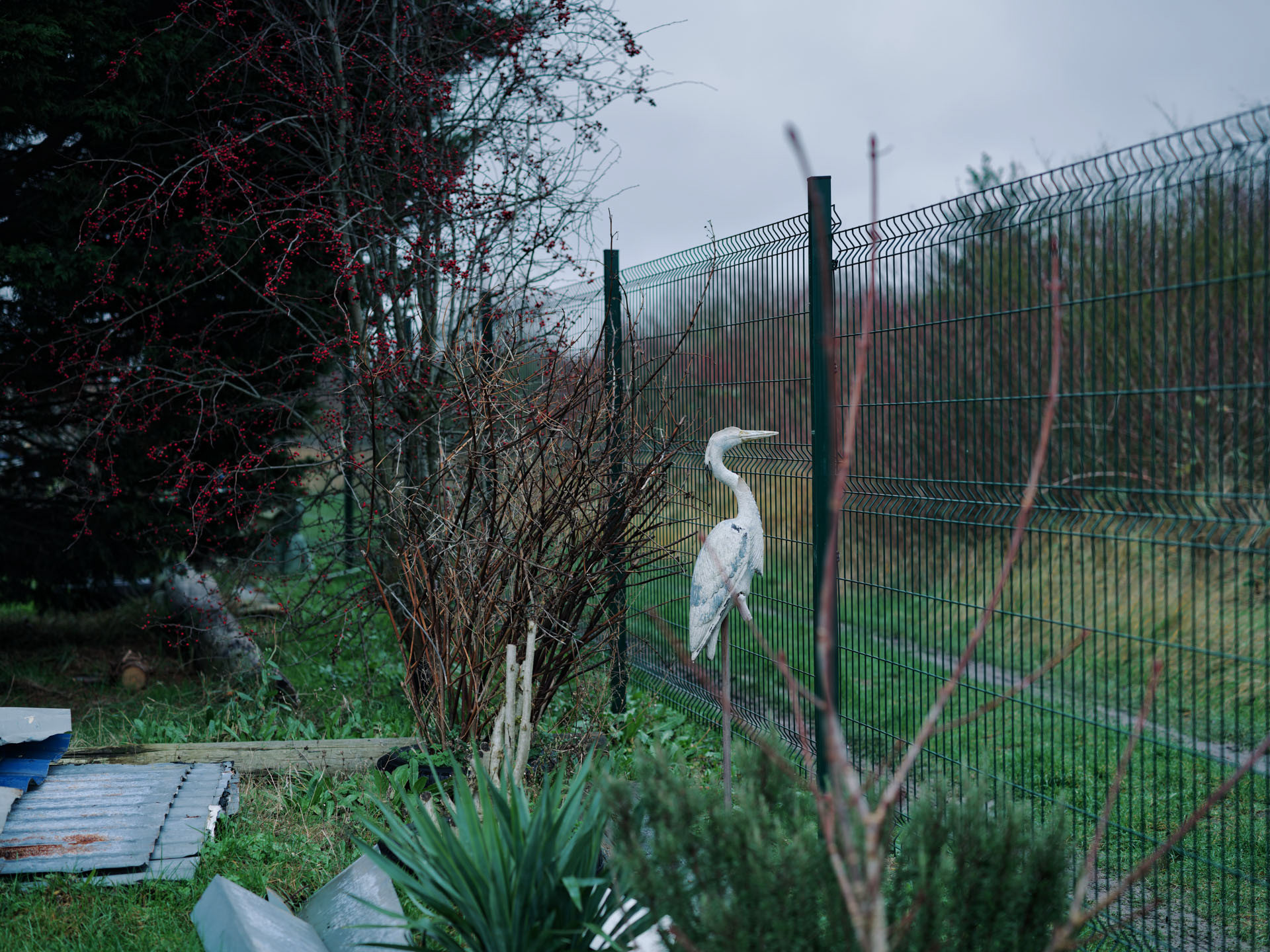
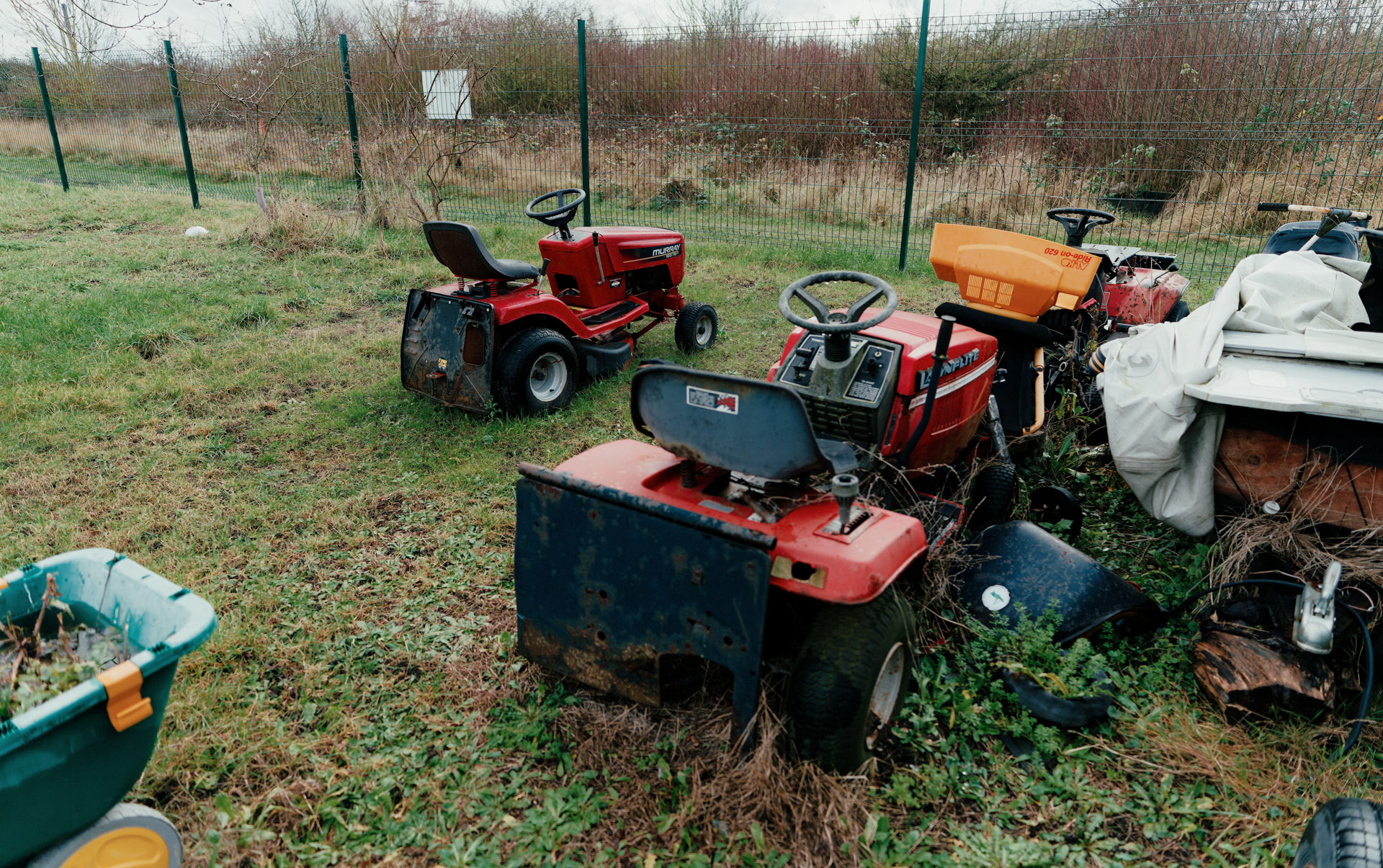
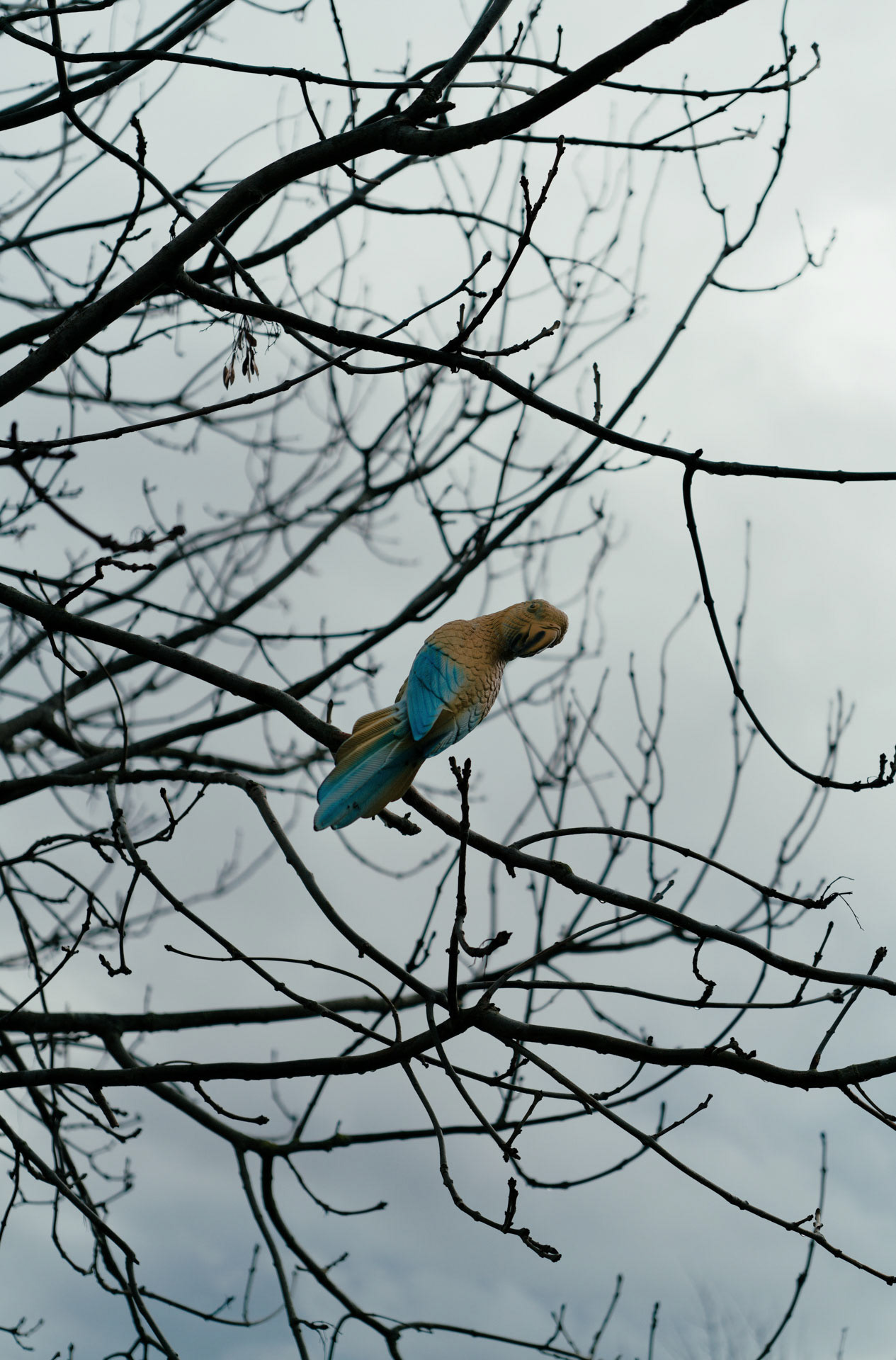
Between the fake birds, fake pig, and the herd of mowers no longer eating grass, this place feels like a zoo abandoned by the keepers.
These pictures change often, if you're interested to see more please bookmark this page.