
The Information Age gallery remains the Science Museum's largest gallery overhaul. It exists to show people the impact of living in the age of telecommunications and the internet, or as we call it The Information Age.
To celebrate this new gallery, to be opened by the HRH Queen Elizabeth II, a new site was commissioned.
The brief: Launch a new website alongside the new Information Age gallery. Stretch goal one - use analytics to understand visitor engagement with online content. Stretch goal two - can the site offer a gallery specific view?
Outcomes: ~£400k yearly saving on content upkeep, back-end ontology system in place for ongoing gallery and online use, both stretch goals met, site engagement target exceeded.
My role: Creative Director, Technical Director.
My role: Creative Director, Technical Director.
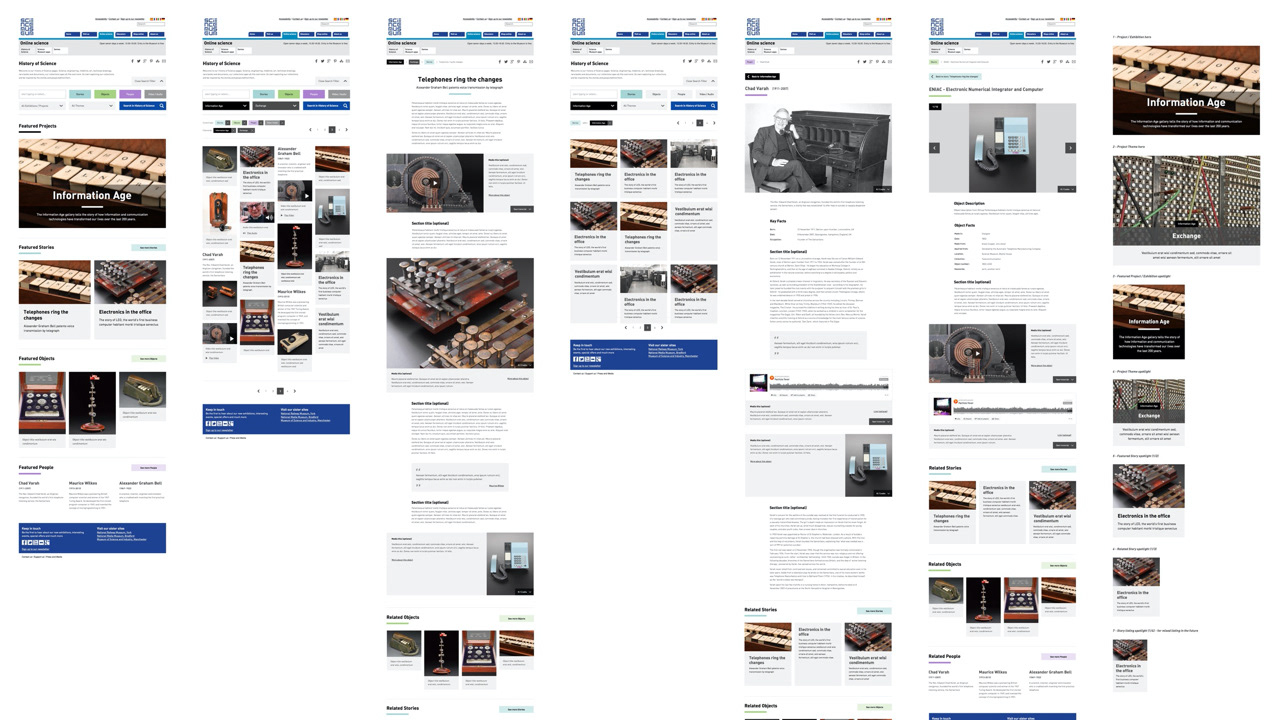
A part of the Information Age Design System
This site, like the Kingspan site, used an ontology to map objects to visitor interests. It also suggest an onward path for visitors to follow - if you like this, you'll probably like this. As such, I decided to use a modular approach and build an early version of web components into the site. Each object could be displayed on the site in a number of ways depending upon it's position on the page and the importance of items that surrounded it. And each component could scale from a list item to a full page.
Built upon Sitecore CMS I also chose to use the Sitecore Experience Platform to offer a form of visitor personalisation - but with a twist.
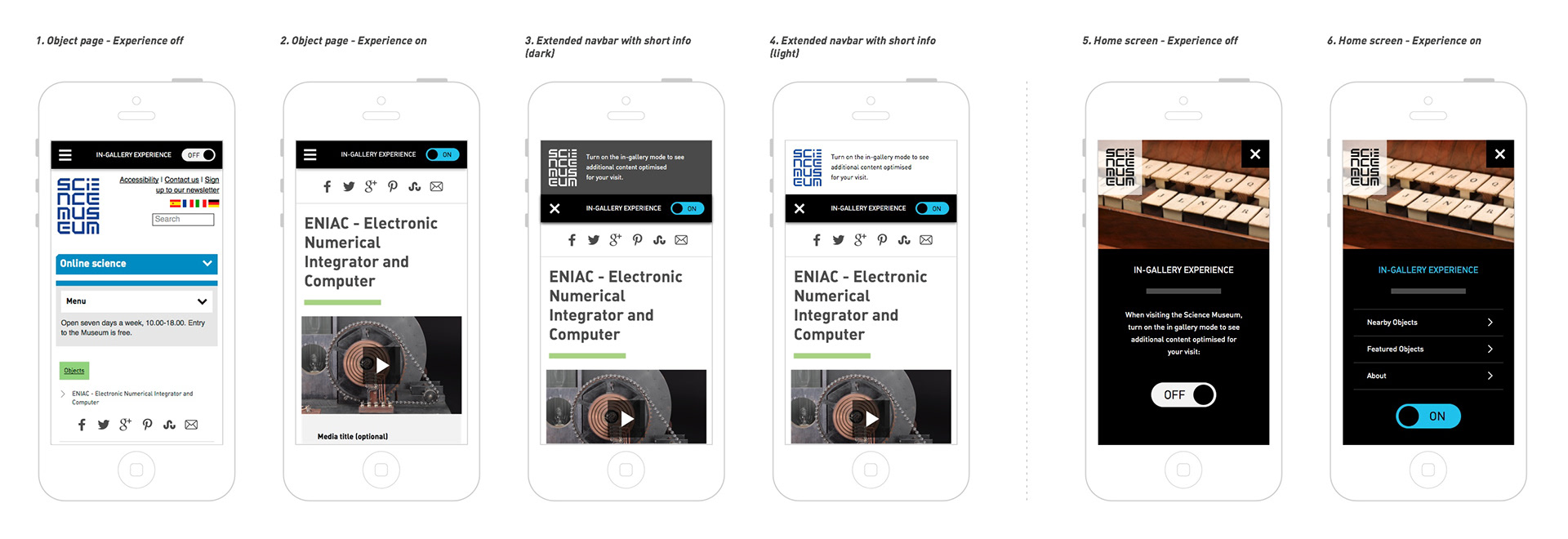
The in-gallery experience wireframe.
The museum had a second challenge. Alongside needing a new site they also wanted to understand what types of content visitors would engage with, and importantly to understand why. For decades they had been generating content and paying to ensure it was audited and up to date, but without any understanding of if anyone looked at it.
We decided to use Sitecore XP along with Adobe Target to run real-time multi-variate testing of how we presented the articles and objects to visitors. Each piece of content would be displayed in dozens of ways, and tested until we had a consistent engagement score. Any content that didn't score high enough was removed from the site. We then waited for 30 days before running the experiments for a second time, and if the content failed again it was flagged for removal permanently.
Although this seems extreme, it reduced the content upkeep requirements extensively with no reduction in public engagement.

The site also offered an in-gallery experience. Using GPS and wifi triangulation we could track a visitors location and show content about the objects they were near, with the ontology system suggesting an onward path.
The gallery and the website were both launched by HRH Queen Elizabeth II on Twitter, the Queen's first tweet.