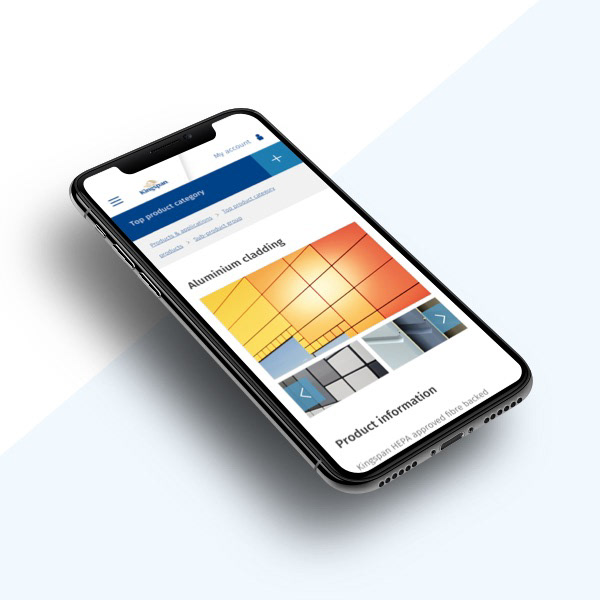
Kingspan is a company that grew through acquisition. The ask for their new website was to consolidate over 250 other sites, hosting over 2 million products, into a new website that supported multiple languages, customer personalisation, integration with CAD tooling, and could adapt to meet the complex needs of international building regulations.
The brief: Consolidate a large set of existing international sites into a new single domain built upon Kentico CMS.
Outcomes: £11.2 million saving in IT infrastructure per year, £950k saving in hosting per year, £77 million sales increase in the year following the site relaunch, increasing to £159 million in the next financial year.
My role: Creative Director, Technical Director.
My role: Creative Director, Technical Director.
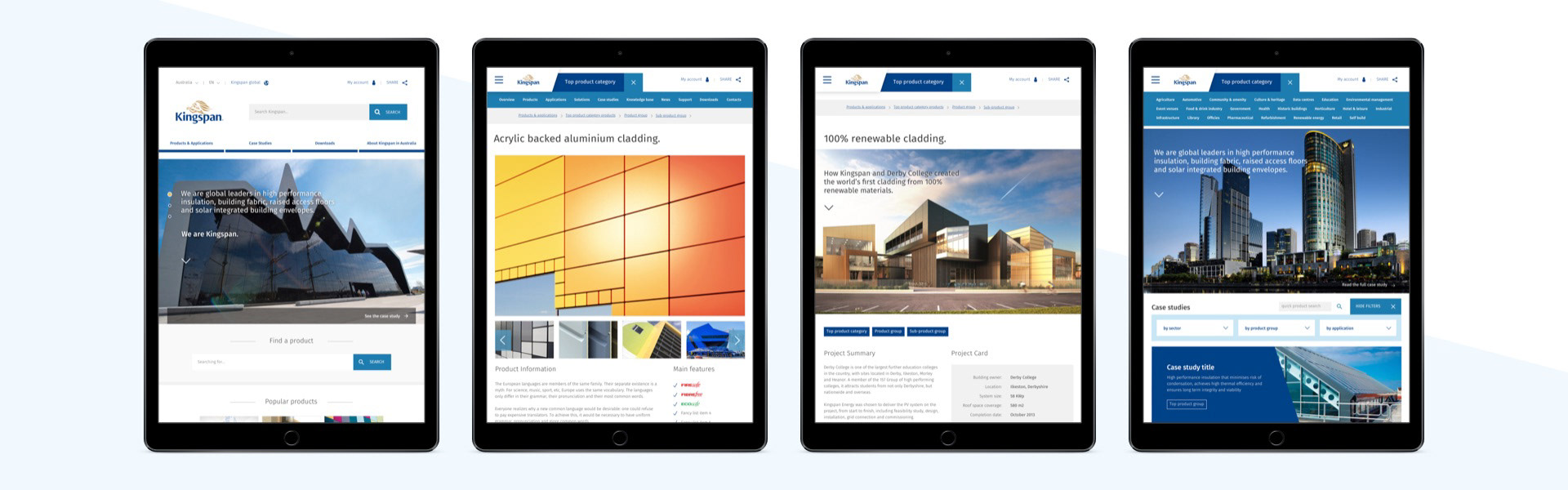
This was a huge project, with over 18 months of discovery before any further design or development was undertaken. It was so large and so complex it was impossible to think of it as one piece of work, so the first thing we had to do was to break it down into epics and tackle each of those. This case study will focus on the design system epic.
The challenge for the design system was to support levels of adaptability that current web technologies didn't fully offer. When this site was built web components were only just being experimented with, and so we had to find a way of using a modular approach in a page based CMS.
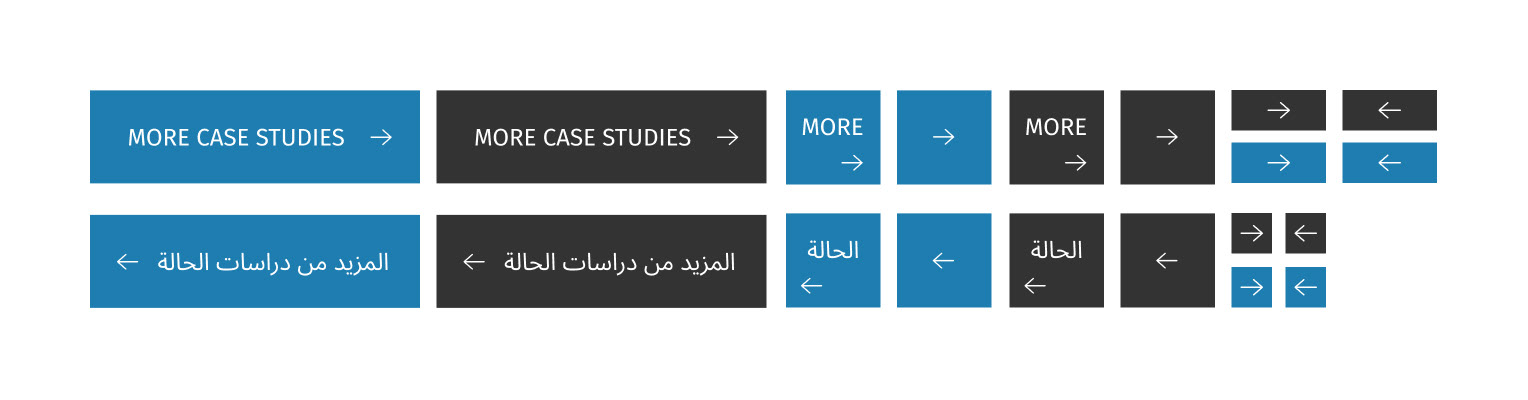
The design system for this site would need to not simply adapt to different device sizes and browser capabilities, but would need to understand and adhere to accessible design regulations at the international, national, and regional level. It would also need to work with languages that read right to left, or top bottom. And we also had to contend with the different cultural influences that would bias user behaviour across the regions this site was aimed at. As such the standard ways of defining a content hierarchy or information architecture did not work. The affordances of each site area couldn't not be fixed, the journeys that people use to complete tasks had to flex. Everything about this site had to be modular.
We based our approach on Lego. We would create a finite set of elements, with a set of rules that defined how they could be assembled, and out of that we would create our designs. We knew that if we built flexibility into the smallest pieces, that flexibility would amplify as they were combined.
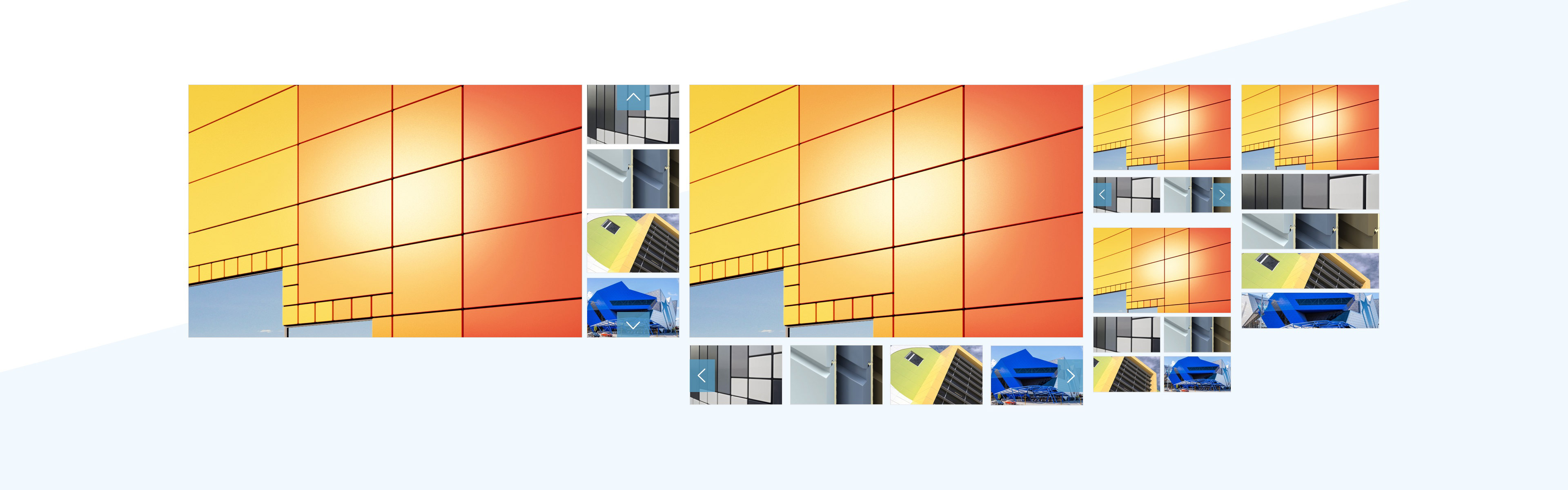
This allows the site to adapt to the specific constraints of each user. If you're a general browser from the UK the site looks like any other. But if you're a Structural Engineer from Germany, working on a foundation for a building in New York, the site knows this and builds itself around your needs. This level of flexibility was only achievable by creating a modular interface system.
Each product that Kingspan offers sits within an ontology - a database that stores the relationship information about each product. This ontology is the heart of the Kingspan site. We used it to map the relationship between the user and the site, or the project the customer is working on and the regulations in the area where the building will be constructed. Through these mappings we build a set of content specifically for each customer.

The products that are available for that customer, for that project, for that build region are displayed and also made available in the CAD tool the project team are working with. This allows faster product choices, instant updates to build costs, an assurance that the scaled drawings are using up to date and accurate information, and the ability to share a complete run down of products to be used with the relevant building control authorities.
It was this seamless link between architect, engineer, CAD operator, and product provider that led to such substantial commercial growth following the release of the site.
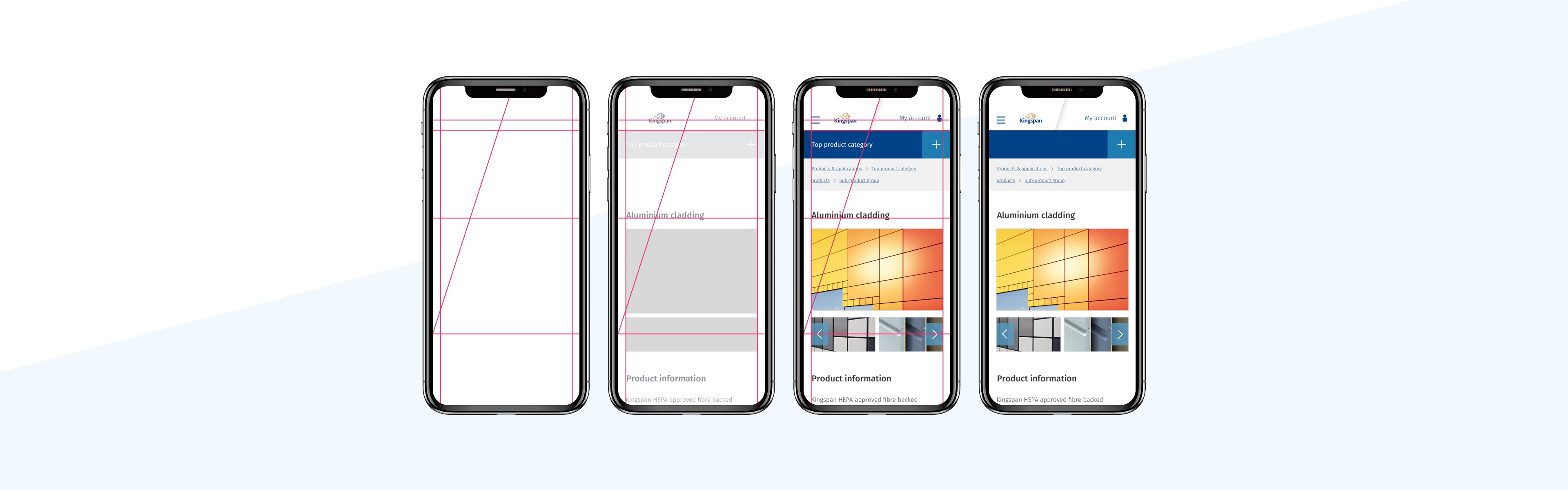
At the time the Kingspan site was the largest site built within Kentico, and the largest ontologically driven website online. From kick off to delivery took 36 months, with 18 months on discovery, 6 months on design, and 12 months on build and release.
We tested in 22 countries, and had over 25,000 people take part.